
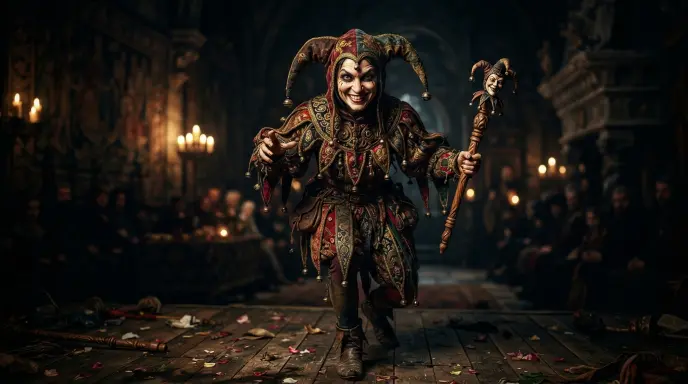
A jester is traditionally a person who entertains others through jokes, wit, playful behavior, or comic performances, especially someone who served in a royal court. The word can also describe a clownish or humorous person in a broader sense. Depending on the context, alternatives can suggest a performer, comedian, fool, joker, or playful entertainer.
Choosing the right alternative depends on what you mean by jester. A historical royal entertainer is not exactly the same as a modern comedian, while “joker” can describe a humorous person without implying a professional role. This guide explains the closest synonyms, contextual alternatives, differences in tone, examples, and the best choices for writing and everyday speech.
Quick Answer
The closest synonyms for jester include fool, court fool, joker, clown, comedian, entertainer, humorist, buffoon, wit, prankster, and comic. The best choice depends on context. “Court fool” fits historical writing, “comedian” suits modern entertainment, and “joker” works well for a humorous person in everyday language.
Quick List of Synonyms for Jester
Closest Alternatives
- Court fool
- Fool
- Joker
- Clown
- Comedian
- Comic
- Humorist
- Buffoon
- Entertainer
- Wit
- Prankster
- Comical performer
Formal or Historical Alternatives
- Court fool
- Royal entertainer
- Court entertainer
- Professional fool
- Comic entertainer
- Humorist
- Wit
- Satirist
Casual Alternatives
- Joker
- Clown
- Funny person
- Prankster
- Goofball
- Wisecracker
- Jokester
Contextual Alternatives
- Comedian
- Performer
- Entertainer
- Comic
- Satirist
- Wit
- Buffoon
- Trickster
Formal Alternatives for Jester

Court Fool
Meaning: A person employed to entertain a monarch or noble household with jokes, stories, music, tricks, or witty remarks.
Explanation: “Court fool” is one of the most precise historical alternatives to “jester.” It preserves the connection between the entertainer and a royal or aristocratic court.
Example: The king summoned his court fool to entertain the guests.
Best Use: Historical fiction, history writing, medieval settings, and discussions of royal courts.
Worst Use: Modern workplace or everyday situations, where it can sound old-fashioned.
Tone: Historical and formal.
Court Entertainer
Meaning: A performer who entertains people at a royal or aristocratic court.
Explanation: This phrase is broader than “jester.” A court entertainer could be a musician, storyteller, comedian, or other performer.
Example: The court entertainer delighted the guests with songs and witty stories.
Best Use: Historical writing when the exact type of performer is uncertain.
Worst Use: When you specifically mean a traditional fool who used humor and satire.
Tone: Formal and descriptive.
Royal Entertainer
Meaning: A person who performs for a king, queen, or royal household.
Explanation: This phrase emphasizes the entertainer’s relationship with royalty rather than the comic role associated with a jester.
Example: The royal entertainer performed before the visiting ambassadors.
Best Use: Historical or fictional royal settings.
Worst Use: When discussing a general comedian with no connection to royalty.
Tone: Formal.
Humorist
Meaning: A person known for creating or expressing humor.
Explanation: A humorist can be considered a modern contextual alternative to “jester,” but the words are not exact synonyms. A humorist may write humorous material rather than perform it.
Example: The humorist was famous for his clever observations about everyday life.
Best Use: Writing, commentary, comedy, and literary discussions.
Worst Use: Historical contexts where the person specifically served as a court jester.
Tone: Professional and literary.
Wit
Meaning: A person known for clever and amusing remarks.
Explanation: “Wit” can describe someone whose humor depends on intelligence and quick verbal responses. It focuses more on cleverness than on a formal entertainment role.
Example: The young nobleman was known as a sharp wit.
Best Use: Literary descriptions and sophisticated discussions of humor.
Worst Use: When you need to describe someone whose main job was entertaining a royal court.
Tone: Refined and literary.
Satirist
Meaning: A person who uses humor, irony, or ridicule to criticize people, institutions, or ideas.
Explanation: A jester could sometimes use satire, but not every jester was a satirist. The term is more specific about the purpose of the humor.
Example: The satirist used humor to criticize the powerful.
Best Use: Political, literary, and cultural discussions.
Worst Use: When the person simply tells jokes without criticizing anything.
Tone: Formal and analytical.
Comic
Meaning: A person who performs or creates comedy.
Explanation: “Comic” is a useful modern alternative when referring to a humorous performer. It does not carry the historical meaning of “jester.”
Example: The comic entertained the audience with short observations.
Best Use: Modern entertainment and comedy.
Worst Use: Medieval or Renaissance writing where historical accuracy matters.
Tone: Neutral to professional.
Comedian
Meaning: A person who entertains people through comedy.
Explanation: “Comedian” is one of the clearest modern alternatives, but it describes a modern profession rather than the traditional role of a royal jester.
Example: The comedian kept the audience laughing throughout the show.
Best Use: Modern entertainment.
Worst Use: Historical writing unless used intentionally as a modern comparison.
Tone: Neutral and professional.
Professional Fool
Meaning: A person whose role was to entertain others by acting foolish, telling jokes, or making humorous observations.
Explanation: This phrase can describe the traditional social role of a jester, especially in historical writing.
Example: The king’s professional fool was permitted to make jokes that others could not.
Best Use: Historical or explanatory writing.
Worst Use: Modern personal descriptions, where “fool” may sound insulting.
Tone: Historical and descriptive.
Comic Entertainer
Meaning: A performer whose main purpose is to make people laugh.
Explanation: This is broader than “jester” and does not imply a royal setting.
Example: The comic entertainer opened the festival with a lively performance.
Best Use: General descriptions of performers.
Worst Use: When historical court service is an essential part of the meaning.
Tone: Neutral and formal.
Semi-Formal and Neutral Alternatives

Entertainer
Meaning: Someone who provides amusement or enjoyment to an audience.
Example: The entertainer performed several amusing tricks for the crowd.
Best Use: General writing when the exact type of performer is not important.
Worst Use: When you specifically need the comic or courtly meaning of “jester.”
Tone: Neutral.
Performer
Meaning: Someone who entertains an audience through acting, comedy, music, dance, or another performance.
Example: The performer entertained the guests with jokes and stories.
Best Use: General entertainment contexts.
Worst Use: When the humor-based role needs to be clear.
Tone: Neutral.
Joker
Meaning: A person who frequently jokes or behaves humorously.
Explanation: “Joker” is common in everyday English, but it can describe almost anyone who likes making jokes. It does not necessarily mean a professional entertainer.
Example: Everyone knew Tom as the joker of the group.
Best Use: Everyday conversation and informal writing.
Worst Use: Formal historical descriptions.
Tone: Casual.
Clown
Meaning: A person who behaves in a funny, silly, or deliberately foolish way; it can also mean a professional comic performer.
Explanation: “Clown” overlaps with “jester” because both can involve comic behavior, but it often has a stronger sense of silliness.
Example: He acted like a clown during the party.
Best Use: Casual descriptions or circus-related contexts.
Worst Use: Professional or respectful writing about a historical jester.
Tone: Casual and sometimes insulting.
Buffoon
Meaning: A person who behaves in a foolish or ridiculous way to amuse others.
Explanation: “Buffoon” is close to “jester” in its comic sense, but it often carries a negative judgment about the person’s behavior.
Example: The arrogant nobleman treated the servant like a buffoon.
Best Use: Literary descriptions and humorous characterization.
Worst Use: Polite professional communication.
Tone: Comic, negative, or mocking.
Jokester
Meaning: A person who frequently makes jokes.
Explanation: “Jokester” is a casual word for someone who enjoys joking. It is not a historical equivalent of “jester.”
Example: My brother is a real jokester at family gatherings.
Best Use: Casual conversation.
Worst Use: Formal writing.
Tone: Friendly and casual.
Wisecracker
Meaning: A person who makes clever, humorous, or sometimes sarcastic remarks.
Explanation: A wisecracker resembles a jester in the use of verbal humor, but the word is strongly informal.
Example: The office wisecracker always had a funny response ready.
Best Use: Casual descriptions.
Worst Use: Formal reports and academic writing.
Tone: Informal.
Prankster
Meaning: Someone who plays practical jokes on others.
Explanation: A prankster may be funny, but pranks are central to the meaning. A jester does not necessarily play practical jokes.
Example: The prankster hid his friend’s shoes as a joke.
Best Use: Casual descriptions of playful behavior.
Worst Use: When the person primarily performs comedy or serves a royal court.
Tone: Informal and playful.
Trickster
Meaning: A person or character who uses clever tricks or deception to achieve an aim or create amusement.
Explanation: Trickster is broader and often involves deception. In mythology and literature, the trickster can be a major character type.
Example: The story features a clever trickster who repeatedly outwits the king.
Best Use: Fiction, folklore, mythology, and storytelling.
Worst Use: As a direct replacement for “jester” in ordinary historical writing.
Tone: Neutral, literary, or playful.
Goofball
Meaning: A person who behaves in a silly or amusing way.
Explanation: “Goofball” captures the playful side of a jester but loses the historical and professional meaning.
Example: He’s a lovable goofball who makes everyone laugh.
Best Use: Friendly informal conversation.
Worst Use: Professional or academic writing.
Tone: Very casual and affectionate.
Informal and Casual Alternatives
Funny Person
“Funny person” is a simple description for someone who regularly makes others laugh.
Example: Everyone likes Sara because she is such a funny person.
Natural use: Everyday speech.
Avoid when: You need historical precision.
Tone: Very simple and casual.
Goof
A “goof” can describe someone who acts foolishly or makes silly mistakes.
Example: Stop being a goof and help me carry these boxes.
It is much more casual than “jester” and is not a true synonym.
Wiseguy
“Wiseguy” can describe someone who makes smart or sarcastic remarks. Depending on context, it can also have other meanings, so it should not automatically replace “jester.”
Example: The wiseguy at the back of the room kept making sarcastic comments.
Tone: Informal and sometimes critical.
Comic
In casual modern speech, “comic” can refer to a comedian or comic performer.
Example: The comic had the audience laughing within minutes.
It works well for modern entertainment but not for every historical use of “jester.”
True Synonyms vs. Contextual Alternatives
Not every word on a synonym list can replace “jester” without changing the meaning. The historical setting, professional role, humor style, and tone all matter.
| Type | What It Means | Can It Replace “Jester”? |
|---|---|---|
| True synonym | Nearly the same meaning and function | Yes, in the right context |
| Near synonym | Similar meaning with some difference | Sometimes |
| Contextual alternative | Works in a particular situation | Only in that context |
| Broader expression | Has a wider meaning | Sometimes |
| Narrower expression | Describes one specific aspect | Only when that aspect is intended |
Court fool is the closest historical alternative. Comedian is a strong modern equivalent for the entertainment aspect, but it does not preserve the royal setting. Joker captures the humorous aspect but is much broader. Buffoon emphasizes foolish behavior and can sound insulting.
Industry-Specific Usage
Business Writing
“Jester” is uncommon in business writing unless you are describing a person metaphorically or discussing a historical example.
For modern professional writing, alternatives such as comedian, humorist, entertainer, or comic performer may be more precise.
Example: The comedian delivered a humorous presentation at the company event.
Corporate Communication
Corporate communication usually benefits from precise, neutral language. Words such as “clown” or “buffoon” can sound insulting.
Instead of:
He behaved like a clown during the meeting.
A neutral version might be:
He used humor throughout the meeting.
Academic Writing
Academic writing should distinguish between historical roles and modern entertainment professions.
For a medieval context, court fool or court entertainer may be more accurate than “comedian.”
Example: Historical records describe the court fool as an entertainer who could use humor in the presence of royalty.
Customer Service
Customer service communication generally should not describe a customer or employee as a “jester,” “clown,” or “buffoon.”
Neutral wording is better:
The employee used humor to create a relaxed atmosphere.
Legal Writing
“Jester” is not normally a legal term. If a legal or historical document refers to a person who served as a royal entertainer, preserve the exact role rather than replacing it with a casual synonym.
For example, court fool may be more precise in a historical legal document than “joker.”
Email Communication
Professional emails rarely need the word “jester.” If discussing an entertainer, use comedian, performer, or entertainer depending on the context.
Email Examples
Client Entertainment
Subject: Entertainment for the Client Event
Hello James,
We have confirmed the comedian for Thursday’s client event. The performer will begin after dinner and provide a short set followed by a question-and-answer session.
Best,
Daniel
Historical Project
Subject: Historical Character for the Presentation
Hi Emma,
For the presentation, I suggest describing the character as a court fool rather than a modern comedian. This better reflects the role of the entertainer within the royal court.
Best regards,
Michael
Event Update
Subject: Performer Confirmed for Friday
Hi Team,
The entertainer for Friday’s event has been confirmed. The performer will arrive at 6:30 p.m. for a brief sound check before the guests arrive.
Regards,
Sarah
Academic Question
Subject: Question About the Historical Character
Dear Professor Adams,
I am reviewing the historical character in my essay and plan to use “court fool” instead of “jester” where the distinction is relevant. I believe this wording better reflects the character’s role.
Best,
Ryan
Vendor Communication
Subject: Comedy Performance Details
Hello Mark,
Thank you for confirming the comic performer for the event. Please send the final performance schedule when it is available.
Kind regards,
Laura
Short Dialogue Examples
Workplace
Person A: Who is presenting at the company dinner?
Person B: We hired a comedian to perform after the meal.
Classroom
Person A: Was a jester the same as a comedian?
Person B: Not exactly. A court fool had a specific historical role in addition to entertaining people.
Customer Service
Person A: The entertainer really made the event enjoyable.
Person B: I agree. His jokes kept the audience engaged.
Casual Conversation
Person A: Who keeps making jokes?
Person B: That’s Jake. He’s the joker of our group.
Historical Discussion
Person A: What should we call the king’s entertainer?
Person B: “Court fool” is probably the most precise historical term.
How to Replace “Jester” in a Sentence
1.Example 1
Original: The king’s jester entertained the guests.
Alternative: The king’s court fool entertained the guests.
Why it works: “Court fool” preserves the historical royal setting.
2.Example 2
Original: The jester made everyone laugh.
Alternative: The comedian made everyone laugh.
Why it works: “Comedian” works when the focus is on modern comic performance.
3.Example 3
Original: He was the jester of the group.
Alternative: He was the joker of the group.
Why it works: “Joker” naturally describes the humorous person in an informal group.
4.Example 4
Original: The jester performed for the royal family.
Alternative: The royal entertainer performed for the royal family.
Why it works: The alternative emphasizes the person’s role as an entertainer.
5.Example 5
Original: The jester used clever remarks to amuse the king.
Alternative: The wit used clever remarks to amuse the king.
Why it works: “Wit” highlights clever verbal humor rather than the person’s official role.
6.Example 6
Original: The jester criticized the nobles through humor.
Alternative: The satirist criticized the nobles through humor.
Why it works: “Satirist” is more precise when humor is being used to criticize people or institutions.
7.Example 7
Original: The boy acted like a jester at the party.
Alternative: The boy acted like a clown at the party.
Why it works: “Clown” captures the silly behavior in this informal context.
8.Example 8
Original: The jester played tricks on the guests.
Alternative: The prankster played tricks on the guests.
Why it works: “Prankster” specifically emphasizes practical jokes, although it does not mean exactly the same thing as “jester.”
Jester Synonyms Comparison Table
| Phrase | Tone | Meaning / Scope | Best Use | Example |
|---|---|---|---|---|
| Court fool | Historical | Royal comic entertainer | Historical writing | The court fool amused the king. |
| Fool | Historical/literary | Comic or foolish figure | Literature | The fool entertained the court. |
| Comedian | Neutral | Modern comic performer | Entertainment | The comedian performed for an hour. |
| Joker | Casual | Person who jokes often | Everyday speech | He is the joker of the group. |
| Clown | Casual | Silly or comic person | Informal writing | He acted like a clown. |
| Humorist | Formal | Creator or performer of humor | Professional writing | The humorist wrote witty essays. |
| Wit | Literary | Clever, amusing person | Literature | She was known as a sharp wit. |
| Satirist | Formal | Person using humor for criticism | Literary analysis | The satirist mocked social customs. |
| Buffoon | Negative | Ridiculous or foolish person | Fiction | The buffoon embarrassed himself. |
| Entertainer | Neutral | Person who amuses an audience | General writing | The entertainer performed for guests. |
| Prankster | Casual | Person who plays practical jokes | Informal contexts | The prankster hid his friend’s bag. |
| Trickster | Literary | Clever person using tricks | Folklore | The trickster fooled the king. |
| Jokester | Casual | Person who loves making jokes | Conversation | My cousin is a jokester. |
| Comic | Neutral | Comedy performer | Modern entertainment | The comic opened the show. |
| Wisecracker | Informal | Person making witty remarks | Casual speech | The wisecracker had another comment. |
Which Alternative Should You Choose?
For Formal Writing
Choose court fool, court entertainer, humorist, or wit, depending on the exact meaning.
For Business Communication
Use neutral terms such as entertainer, comedian, or performer. Avoid insulting words such as “buffoon” or “clown.”
Also For Academic Writing
Use court fool for historical contexts and satirist when criticism through humor is the central point.
For Legal Writing
Use the most precise descriptive term available. If the person historically served as a royal entertainer, court fool may preserve more meaning than a casual alternative.
For Professional Email
Use performer, comedian, or entertainer depending on the person’s actual role.
Also For Everyday Conversation
Joker, jokester, comic, or clown can work, but each has a different tone.
For Casual Messages
Words such as jokester, goofball, and wisecracker can sound natural among friends, but they are not interchangeable with “jester” in formal or historical writing.
Grammar and Usage Guide
Is “Jester” a Noun?
Yes. “Jester” is a countable noun.
Example: The jester entertained the king.
What Is the Plural of Jester?
The plural is jesters.
Example: Several jesters performed at the festival.
Can “Jester” Be Used as an Adjective?
Usually no. It is primarily a noun. When describing something associated with a jester, use phrases such as jester’s costume or jester-like behavior.
Example: The performer wore a jester’s hat.
Possessive Form
For one jester, use jester’s.
Example: The jester’s costume was brightly colored.
For multiple jesters, use jesters’.
Example: The jesters’ performances entertained the crowd.
“Jester” vs. “Joker”
These words overlap, but they are not identical. A jester traditionally has a specific entertainer role, often connected to a royal court. A joker is generally anyone who enjoys making jokes.
“Jester” vs. “Fool”
“Fool” can refer to a historical court entertainer, but it also commonly means an unintelligent or foolish person. Context is therefore important.
Common Mistakes to Avoid
Treating Every Alternative as an Exact Synonym
“Comedian,” “joker,” “prankster,” and “satirist” describe different aspects of a jester. They should not automatically be treated as interchangeable.
Using “Clown” in Formal Writing
“Clown” can sound dismissive or insulting when describing a person.
Calling Every Humorist a Jester
A humorist may write books or essays and never perform for an audience. The traditional role of a jester is much more specific.
Confusing a Prankster With a Jester
A prankster plays practical jokes. A jester may tell jokes, perform, sing, tell stories, or use satire.
Using Historical Terms for Modern Performers
Calling a modern stand-up comedian a “court fool” would normally be inaccurate unless you are using the phrase metaphorically.
Ignoring Tone
“Buffoon” and “clown” can carry negative meanings. They are not always friendly alternatives.
Using “Wit” as a Direct Replacement Everywhere
“Wit” emphasizes cleverness and verbal humor, not necessarily professional entertainment.
Choosing a Broader Word When Precision Matters
“Entertainer” can describe a jester, but it can also describe a musician, dancer, magician, or actor. Use a more specific term when the distinction matters.
When Not to Use “Jester”
In Modern Professional Communication
“Jester” can sound theatrical or historical in ordinary business writing. “Comedian” or “entertainer” may be clearer.
When You Mean a Person Who Plays Practical Jokes
Use prankster if practical jokes are the main behavior.
When You Mean a Modern Stand-Up Performer
Use comedian or comic when the person performs modern comedy.
Also When You Mean a Person Who Criticizes Through Humor
Use satirist when satire is the central feature.
When the Person Is Simply Funny
Use joker, jokester, or funny person in casual contexts.
When Precision Is More Important Than Style
Choose the word that describes the actual role rather than simply choosing a colorful synonym.
Also When “Jester” Is Actually the Better Choice
Keep jester when writing about a traditional court entertainer or when the historical or literary role is important. It is more precise than many modern alternatives in that setting.
Advanced Writer Tips
Tone Control
Use court fool for a historical tone, comedian for a modern neutral tone, and jokester for casual conversation.
Professional Email Etiquette
Avoid colorful labels when discussing real people professionally. Descriptive terms such as “performer” and “comedian” are usually clearer and more respectful.
Politeness
Words such as “buffoon” and “clown” may imply criticism. If you only want to describe humor, use a neutral word such as “comedian” or “entertainer.”
Context Alignment
Think about the setting first. A royal court, comedy club, classroom, office, and family gathering may all require different vocabulary.
Precision
Ask what aspect of a jester you are actually describing: the historical role, humor, performance, foolish behavior, cleverness, or satire. Then choose the word that matches that feature.
Readability
Do not replace “jester” with a complicated expression simply to sound sophisticated. If “comedian” communicates the idea clearly, it is usually better than a longer phrase.
Related Questions
What Is Another Way to Say Jester?
Common alternatives include court fool, fool, joker, comedian, comic, entertainer, humorist, wit, buffoon, and performer. The best choice depends on whether you mean a historical court entertainer, a modern comedian, or simply a person who makes jokes.
What Is a Professional Alternative to Jester?
For modern professional writing, comedian, performer, entertainer, or humorist may work. For historical writing, court fool is usually more precise.
Is a Formal Alternative to Jester?
Court fool, court entertainer, royal entertainer, humorist, and wit can work in formal or literary contexts, depending on the intended meaning.
Is Jester a Formal Word?
“Jester” is a standard English word, but it has a historical and literary flavor because it is strongly associated with royal courts and traditional entertainers.
Can “Joker” Replace “Jester”?
Sometimes. “Joker” works when the main idea is a person who makes jokes. It does not preserve the historical meaning of a royal entertainer.
What Is the Difference Between a Jester and a Clown?
A jester traditionally served as an entertainer, often at a royal court, while “clown” generally refers to a comic performer or a person behaving in a silly way. The words overlap but have different historical and cultural associations.
What Is the Difference Between a Jester and a Satirist?
A jester is primarily a comic entertainer, while a satirist uses humor, irony, or ridicule to criticize people, ideas, or institutions. A jester can use satire, but the roles are not identical.
FAQs
What Is the Closest Synonym for Jester?
The closest historical synonym is court fool because both refer to a person whose role involved entertaining a royal or noble court through humor and performance.
Is “Fool” Another Word for Jester?
Yes, in historical contexts. “Fool” can refer to a court entertainer, but it also has a separate meaning: an unintelligent or foolish person. Context determines which meaning is intended.
Is “Comedian” the Same as “Jester”?
Not exactly. A comedian is a modern entertainer who performs comedy, while a jester traditionally had a specific role in a royal or noble household. They overlap in their use of humor.
Is “Joker” a Good Synonym for Jester?
“Joker” is useful in casual contexts when you mean someone who frequently makes jokes. It is broader and less historical than “jester.”
Is “Buffoon” a Positive Word?
Usually not. “Buffoon” often suggests that someone is ridiculous, foolish, or embarrassing. It can work in humorous or literary writing but may sound insulting when used about a real person.
What Is a Modern Word for Jester?
Depending on the context, modern alternatives include comedian, comic, entertainer, performer, humorist, joker, and jokester. None preserves every meaning of the traditional word.
What Word Should I Use for a Jester in Historical Fiction?
Jester and court fool are usually the clearest choices. “Court fool” can emphasize the person’s official connection to a royal household, while “jester” is familiar and immediately recognizable to modern readers.
Key Takeaways
- Court fool is one of the closest historical alternatives to “jester.”
- Comedian and comic work better for modern entertainment contexts.
- Joker and jokester are natural choices for casual descriptions.
- Buffoon and clown can carry negative or mocking meanings.
- Always choose the alternative that matches the person’s role, setting, tone, and intended meaning.
Conclusion
The best synonym for jester depends on which part of the word’s meaning you want to preserve. If you are writing about a traditional royal entertainer, court fool is one of the most precise alternatives. For modern entertainment, comedian, comic, or performer may be more natural. In casual conversation, joker or jokester can describe someone who regularly makes people laugh.
Other choices, such as wit, satirist, prankster, trickster, and buffoon, focus on specific qualities rather than reproducing the complete meaning of “jester.” That distinction matters. A good synonym should not merely sound similar; it should communicate the intended role, tone, and context. Before replacing the original word, consider whether you are describing a historical position, a professional entertainer, a humorous personality, or a particular style of comic behavior.