
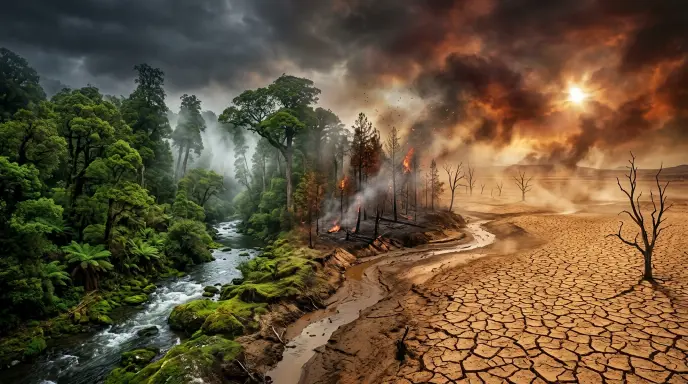
Climate change refers to long-term shifts in temperatures, weather patterns, and other features of Earth’s climate. The phrase is widely used in science, education, news reporting, environmental discussions, and public policy. Writers sometimes need alternative expressions to explain the topic more clearly, avoid repetition, or match a specific audience.
However, not every alternative means exactly the same thing. Terms such as global warming, climate crisis, climate variability, and environmental change have different meanings and levels of urgency. Choosing the right expression depends on whether you are writing an academic essay, a business report, a news article, or a casual conversation. This guide explores useful alternatives, explains their differences, and provides practical examples to help you choose accurate wording.
Quick Answer
Useful synonyms and alternatives for climate change include climate shifts, changing climate, long-term climate change, global climate change, climate transformation, and climate disruption. Related expressions include global warming, climate crisis, and climate instability, but these are not exact synonyms. The best choice depends on your meaning, audience, and writing purpose.
Quick List: Alternatives for Climate Change
Here are useful expressions grouped by context.
Closest Alternatives
- Climate shifts
- Changing climate
- Long-term climate change
- Global climate change
- Climate transformation
- Changes in Earth’s climate
- Climate-related changes
- Shifts in climate patterns
Formal and Academic Alternatives
- Long-term climatic shifts
- Changes in climatic conditions
- Global climatic changes
- Climate system changes
- Anthropogenic climate change
- Human-induced climate change
- Climate regime shifts
- Alterations in climate patterns
Neutral Alternatives
- Changing weather patterns
- Shifts in temperature and rainfall
- Long-term environmental changes
- Changes in global temperatures
- Shifting climate conditions
- Changes in regional climate
- Climate pattern changes
Contextual Alternatives
- Global warming
- Climate crisis
- Climate disruption
- Climate instability
- Climate emergency
- Climate variability
- Environmental change
- Planetary warming
Informal Alternatives
- A changing climate
- The planet getting warmer
- Changes in Earth’s weather patterns
- Our changing environment
- A warming planet
These expressions are not interchangeable in every sentence. For example, global warming focuses mainly on rising average temperatures, while climate change includes broader shifts in temperature, rainfall, extreme weather patterns, and other climate conditions.
Formal Alternatives for Climate Change
Formal wording is especially useful in research papers, environmental reports, government documents, and professional communication. The following alternatives offer different levels of precision.
1. Long-Term Climatic Shifts
Meaning: Lasting changes in climate conditions over an extended period.
Explanation: This is a close alternative when discussing long-term changes in temperature, rainfall, or other climate patterns. It emphasizes gradual or sustained shifts.
Example: Long-term climatic shifts are affecting agricultural planning in many regions.
Best Use: Scientific reports, academic essays, and environmental assessments.
Worst Use: Casual conversation, where the phrase may sound unnecessarily technical.
Tone: Formal and scientific.
2. Global Climate Change
Meaning: Long-term changes affecting Earth’s climate system on a worldwide scale.
Explanation: This is a close alternative to climate change when the discussion concerns global rather than local or regional effects.
Example: Global climate change presents challenges for food security and water management.
Best Use: Research papers, educational materials, and international policy discussions.
Worst Use: Discussions focused exclusively on a small local climate pattern.
Tone: Neutral and professional.
3. Human-Induced Climate Change
Meaning: Climate change caused by human activities.
Explanation: This narrower expression emphasizes human influence, including greenhouse gas emissions from burning fossil fuels and deforestation. It is appropriate when the cause is relevant to the discussion.
Example: Human-induced climate change is increasing the long-term risks associated with rising temperatures.
Best Use: Climate science, environmental policy, and research writing.
Worst Use: When discussing climate changes without specifying their causes.
Tone: Formal and evidence-focused.
4. Anthropogenic Climate Change
Meaning: Climate change resulting from human activities.
Explanation: Anthropogenic means caused by humans. The phrase has essentially the same scope as human-induced climate change but is more technical.
Example: Researchers are examining the regional effects of anthropogenic climate change.
Best Use: Scientific journals, technical reports, and advanced academic writing.
Worst Use: General-audience articles where a simpler expression would be clearer.
Tone: Highly technical and academic.
5. Changes in Climatic Conditions
Meaning: Alterations in the usual climate characteristics of a place or region.
Explanation: This expression describes changes in temperature, precipitation, humidity, and other climate features. It may refer to global trends or regional developments.
Example: Changes in climatic conditions have affected crop selection in the region.
Best Use: Agricultural studies, environmental assessments, and formal reports.
Worst Use: Headlines or short sentences that require concise wording.
Tone: Formal and descriptive.
6. Climate System Changes
Meaning: Changes affecting the interconnected parts of Earth’s climate system.
Explanation: This phrase can include changes involving the atmosphere, oceans, land, ice, and interactions among them. It may describe processes broader than temperature change alone.
Example: Climate system changes are influencing ocean temperatures and ice loss.
Best Use: Scientific research and technical education.
Worst Use: Everyday writing that does not require a systems-based explanation.
Tone: Technical and precise.
7. Climate Regime Shifts
Meaning: Significant changes in the typical behavior or patterns of a climate system.
Explanation: A regime shift usually suggests a substantial change in the system’s behavior, not simply any long-term climate trend. It is therefore a narrower scientific expression.
Example: The study investigated possible climate regime shifts in the region.
Best Use: Specialized climate research and technical discussions.
Worst Use: As a general replacement for every reference to climate change.
Tone: Highly specialized.
8. Alterations in Climate Patterns
Meaning: Changes in recurring patterns of temperature, rainfall, or other climate features.
Explanation: This expression emphasizes changes in patterns rather than climate change as a complete global phenomenon.
Example: Alterations in climate patterns may influence the timing of planting seasons.
Best Use: Academic assignments, environmental reports, and educational articles.
Worst Use: When the intended meaning specifically concerns global warming and its causes.
Tone: Formal and descriptive.
9. Climate Transformation
Meaning: A substantial change in climate conditions or characteristics.
Explanation: This phrase can communicate a major change, but it is less standardized than climate change. It should be used when the context supports the idea of a substantial transformation.
Example: The region is adapting to a major transformation in its climate conditions.
Best Use: Explanatory writing about significant regional changes.
Worst Use: Technical writing that requires a well-defined scientific term.
Tone: Formal and emphatic.
10. Climate Disruption
Meaning: A disturbance in climate patterns or the systems that depend on them.
Explanation: This phrase highlights disruption and its potential consequences. It is more interpretive than the neutral term climate change.
Example: Climate disruption is creating additional challenges for coastal communities.
Best Use: Environmental communication, policy discussions, and impact-focused reports.
Worst Use: Scientific contexts where a neutral description is required and the word disruption has not been defined.
Tone: Serious and impact-focused.
Semi-Formal and Neutral Alternatives

These expressions work well in school assignments, workplace documents, websites, and everyday explanations.
11. Changing Climate
Meaning: A climate that is gradually or noticeably changing.
Explanation: This is one of the most natural alternatives. It preserves the general meaning without sounding overly technical.
Example: A changing climate is affecting water availability in dry regions.
Best Use: General articles, school assignments, and public information.
Worst Use: When a technical report requires a specific measurement or defined process.
Tone: Neutral and accessible.
12. Climate Shifts
Meaning: Changes in climate conditions or patterns.
Explanation: This concise phrase works when discussing changes across a region or over time. Depending on context, it can suggest either gradual trends or more pronounced changes.
Example: Climate shifts may affect the distribution of certain plant species.
Best Use: Headlines, reports, and concise explanations.
Worst Use: Where the precise nature or cause of the change needs to be stated.
Tone: Neutral and concise.
13. Shifting Climate Patterns
Meaning: Changes in recurring climate conditions, such as rainfall or temperature.
Explanation: This expression focuses on patterns rather than the full climate system.
Example: Shifting climate patterns have made seasonal planning more difficult for farmers.
Best Use: Articles about agriculture, ecosystems, and regional impacts.
Worst Use: When the sentence refers only to rising global temperatures.
Tone: Neutral and descriptive.
14. Climate-Related Changes
Meaning: Changes associated with climate conditions or climate change.
Explanation: This broad expression is useful when discussing effects or developments linked to climate. It does not necessarily identify the precise cause of every change.
Example: The city is reviewing infrastructure plans in response to climate-related changes.
Best Use: Business reports, planning documents, and public communication.
Worst Use: When the exact climate process must be identified.
Tone: Professional and flexible.
15. Long-Term Environmental Changes
Meaning: Lasting changes in the natural environment.
Explanation: This is broader than climate change because environmental changes may also result from pollution, habitat destruction, or land use.
Example: Long-term environmental changes are affecting local ecosystems.
Best Use: Writing that covers climate alongside other environmental issues.
Worst Use: When you mean climate change alone.
Tone: Neutral and broad.
16. Changes in Global Temperatures
Meaning: Changes in temperatures across the world.
Explanation: This phrase is narrower than climate change. It is useful when temperature trends are the specific subject of the sentence.
Example: Changes in global temperatures can influence ocean circulation and ice cover.
Best Use: Discussions focused on temperature records or warming trends.
Worst Use: When discussing climate impacts unrelated directly to temperature.
Tone: Clear and factual.
17. Changing Weather Patterns
Meaning: Changes in the usual timing, frequency, or distribution of weather conditions.
Explanation: This is a common public-facing expression, but weather and climate are different. Weather describes short-term conditions, while climate describes longer-term patterns. Use this phrase when discussing patterns across extended periods.
Example: Changing weather patterns are complicating seasonal farming decisions.
Best Use: Public education, news articles, and everyday explanations.
Worst Use: As a technical substitute for climate change without clarifying the long-term context.
Tone: Accessible and conversational.
18. Climate Instability
Meaning: A tendency for climate conditions or patterns to become less stable.
Explanation: This expression emphasizes instability rather than change in general. It may be useful when the discussion concerns shifting patterns or increased uncertainty.
Example: Climate instability can make long-term water planning more challenging.
Best Use: Risk assessments and discussions of climate impacts.
Worst Use: When there is no evidence or explanation supporting the idea of instability.
Tone: Serious and analytical.
Informal and Casual Alternatives
Casual expressions are useful in conversations, social media posts, and simple educational explanations. They are less suitable for precise scientific claims.
19. A Warming Planet
Meaning: Earth experiencing rising average temperatures.
Explanation: This is a concise expression for discussions about global warming. It does not cover every aspect of climate change.
Example: A warming planet creates challenges for heat-sensitive crops.
When It Sounds Natural: In speeches, documentaries, and general-interest articles.
When to Avoid It: When the topic is climate change beyond warming, such as changing precipitation patterns.
Tone: Accessible and evocative.
20. The Planet Getting Warmer
Meaning: A simple description of rising global temperatures.
Explanation: This phrase communicates the idea without technical language.
Example: Scientists are studying what happens as the planet gets warmer.
When It Sounds Natural: In conversations with children or general audiences.
When to Avoid It: In technical reports or sentences requiring precise terminology.
Tone: Casual and straightforward.
21. Our Changing Environment
Meaning: Changes occurring in the surroundings and natural world.
Explanation: This phrase includes climate change but may also refer to pollution, biodiversity loss, and habitat changes.
Example: Our changing environment requires careful planning for future water needs.
When It Sounds Natural: In everyday discussions and introductory educational content.
When to Avoid It: When the reader needs to know specifically that you mean climate change.
Tone: Friendly and broad.
22. Changes in Earth’s Weather Patterns
Meaning: Changes in the patterns of weather experienced over time.
Explanation: This phrase helps explain climate change to general readers, but it is less technically precise than climate change itself.
Example: Changes in Earth’s weather patterns can affect growing seasons.
When It Sounds Natural: In basic educational materials and casual explanations.
When to Avoid It: In advanced scientific writing without clarifying the distinction between weather and climate.
Tone: Simple and explanatory.
True Synonyms vs. Contextual Alternatives
Climate change is a scientific term with a broad meaning. Few alternatives match its full meaning in every situation.
| Type | What It Means | Can It Replace the Original? |
|---|---|---|
| Close synonym | A phrase with nearly the same meaning | Often, if the context matches |
| Near synonym | A related phrase with a small difference | Sometimes |
| Contextual alternative | A phrase that fits a specific situation | Only in the right context |
| Broader expression | A term covering a wider subject | When the wider scope is intended |
| Narrower expression | A term describing one part of the subject | Only when that part is the focus |
Is Global Warming the Same as Climate Change?
No. Global warming refers primarily to the long-term rise in Earth’s average surface temperature. Climate change includes global warming and other long-term changes, such as shifts in precipitation, ocean conditions, and climate extremes.
Is Climate Crisis a True Synonym?
Not exactly. Climate crisis emphasizes the seriousness and urgency of climate-related risks. It is a framing expression rather than a neutral scientific replacement.
Is Climate Variability the Same as Climate Change?
No. Climate variability refers to fluctuations in climate conditions over time. It can occur naturally and does not necessarily indicate a long-term directional change.
Is Environmental Change a Good Alternative?
Sometimes. Environmental change is broader because it includes many changes unrelated to climate, such as habitat loss and pollution. Use it only when the wider meaning fits.
Industry-Specific Usage
Business Writing
Businesses often discuss climate change in relation to supply chains, infrastructure, insurance, energy use, and long-term planning.
Useful alternatives include:
- Climate-related risks
- Climate impacts
- Changing climate conditions
- Climate-related challenges
Example: Our company is assessing climate-related risks to its supply chain.
The phrase climate-related risks is appropriate when the focus is on potential harm or uncertainty, not climate change as a scientific process.
Corporate Communication
Corporate reports and public announcements should use language that is clear, measurable, and consistent.
Example: The organization is reviewing its operations to understand the effects of climate change on long-term business planning.
Use climate impacts when discussing consequences, climate mitigation when discussing efforts to reduce the causes of climate change, and climate adaptation when discussing preparation for actual or expected effects.
Avoid vague phrases such as environmental challenges if the report specifically concerns greenhouse gas emissions or climate-related risks.
Academic Writing
Academic writing benefits from precise terminology.
Useful expressions include anthropogenic climate change, global climate change, and long-term climatic shifts. However, these phrases serve different purposes.
Example: This paper examines the relationship between greenhouse gas emissions and anthropogenic climate change.
Define technical terms when necessary, cite appropriate research, and avoid replacing scientific language merely to reduce repetition. Repeating a precise term is often better than introducing an inaccurate synonym.
Legal Writing
Legal documents require particular care because defined terms may have specific meanings under legislation, regulations, contracts, or reporting standards.
Expressions such as climate-related risk, greenhouse gas emissions, and environmental harm are not automatic substitutes for climate change. Each describes a different concept.
Example: The agreement requires the parties to report specified climate-related risks.
When drafting legal documents, preserve the terminology used in the relevant law or agreement. A general synonym may change the intended scope or create ambiguity.
Email Communication
Professional emails should use the clearest phrase for the task.
- Client email: “We are reviewing the potential effects of climate change on project delivery.”
- Internal update: “The team is assessing climate-related risks to our facilities.”
- Meeting request: “Could we discuss our climate adaptation plans at the next meeting?”
- Vendor follow-up: “Please share any information about climate-related disruptions to your supply chain.”
Choose wording that communicates the specific issue rather than using technical expressions to sound more professional.
Email Examples
1. Client Communication
Subject: Climate-Related Risks to the Project
Hello Jordan,
We are reviewing potential climate-related risks that could affect the project’s schedule and operating costs. We will share our findings and recommended next steps after the assessment is complete.
Best regards,
Morgan
2. Internal Project Update
Subject: Update on Climate Impact Assessment
Hi Team,
The initial assessment of climate impacts is underway. We are focusing on water availability, extreme heat, and the resilience of our facilities.
Please send any relevant information by Friday so we can include it in the next report.
Thanks,
Alex
3. Academic Request
Subject: Question About Climate Change Terminology
Dear Professor Lee,
I am refining my research paper and would like to confirm whether anthropogenic climate change is the most suitable term for discussing climate changes caused by human activities.
Thank you for your guidance.
Sincerely,
Taylor
4. Vendor Follow-Up
Subject: Supply Chain Climate Risk Information
Hello Sam,
Could you share any available information about climate-related disruptions that may affect material availability or delivery times?
This will help us improve our supply chain planning.
Thank you,
Chris
5. Meeting Request
Subject: Discussion of Climate Adaptation Plans
Hi Priya,
Could we schedule a short meeting next week to discuss our climate adaptation plans? I would like to review possible measures for managing heat-related risks at our facilities.
Please let me know what time works for you.
Best,
Daniel
Short Dialogue Examples
1. Workplace
Person A: Have we considered climate change in the new facility plan?
Person B: Yes. We are assessing climate-related risks, especially extreme heat and flooding.
2. Classroom
Person A: Is global warming another name for climate change?
Person B: They are related, but global warming mainly means rising average temperatures.
3. Customer Service
Person A: Why are you reviewing your delivery arrangements?
Person B: We are checking whether changing climate conditions could affect transport routes.
4. Casual Conversation
Person A: Why are people talking about a warming planet?
Person B: They are discussing rising global temperatures and their wider effects on the climate.
5. Professional Discussion
Person A: Should our report use the term climate crisis?
Person B: Use it if we intend to emphasize urgency. For a neutral scientific explanation, climate change is more suitable.
How to Replace “Climate Change” in a Sentence
Example 1
Original: Climate change affects agricultural production.
Alternative: Long-term climatic shifts affect agricultural production.
Why it works: The alternative emphasizes sustained changes in climate. It is slightly more technical.
Example 2
Original: Climate change is a major global concern.
Alternative: Global climate change is a major international concern.
Why it works: The revised sentence emphasizes the worldwide scope without significantly changing the meaning.
Example 3
Original: Climate change is linked to rising global temperatures.
Alternative: Global warming is linked to rising average global temperatures.
Why it works: The new sentence focuses specifically on warming, narrowing the original meaning.
Example 4
Original: Climate change may affect the company’s supply chain.
Alternative: Climate-related risks may affect the company’s supply chain.
Why it works: The alternative emphasizes potential business risks rather than the climate process itself.
Example 5
Original: Climate change is affecting rainfall patterns.
Alternative: Shifting climate patterns are affecting rainfall.
Why it works: The alternative highlights changes in rainfall-related patterns. It is a close contextual replacement.
Example 6
Original: Climate change caused by human activities requires serious attention.
Alternative: Human-induced climate change requires serious attention.
Why it works: The revised sentence is more concise and retains the emphasis on human causes.
Example 7
Original: Climate change may alter local ecosystems.
Alternative: Long-term environmental changes may alter local ecosystems.
Why it works: The sentence becomes broader. Environmental changes may have causes other than climate, so use this wording only if that broader meaning is intended.
Example 8
Original: Climate change presents challenges for coastal communities.
Alternative: Climate disruption presents challenges for coastal communities.
Why it works: The alternative emphasizes harmful disturbances. It sounds more forceful and should match the intended tone.
Example 9
Original: Climate change is an important topic in environmental science.
Alternative: Changes in Earth’s climate are an important topic in environmental science.
Why it works: This version explains the concept in accessible language while retaining its broad meaning.
Comparison Table: Choosing the Right Phrase
| Phrase | Tone | Meaning / Scope | Best Use | Example |
|---|---|---|---|---|
| Climate change | Neutral | Broad, long-term climate changes | General and scientific writing | Climate change affects ecosystems. |
| Global warming | Scientific and accessible | Rising average global temperatures | Temperature trends | Global warming contributes to ice loss. |
| Climate shifts | Neutral | Changes in climate patterns | Concise reports | Climate shifts affect crop planning. |
| Human-induced climate change | Formal | Climate change caused by people | Research and policy | Human-induced climate change is widely studied. |
| Climate crisis | Urgent | Emphasizes seriousness | Advocacy and public discussion | The climate crisis demands attention. |
| Climate variability | Technical | Fluctuations in climate | Climate research | Climate variability affects rainfall. |
| Climate-related risks | Professional | Potential climate-related harm | Business planning | Climate-related risks affect infrastructure. |
| Climate impacts | Neutral | Effects associated with climate change | Reports and assessments | Climate impacts threaten coastal habitats. |
| Changing climate | Accessible | A climate that is changing | General articles | A changing climate affects farming. |
| Environmental change | Broad | Changes in the natural environment | Environmental topics | Environmental change affects biodiversity. |
Which Alternative Should You Choose?
- Formal writing: Use long-term climatic shifts or changes in climatic conditions when the technical context supports them.
- Business communication: Choose climate-related risks for potential threats and climate impacts for effects.
- Academic writing: Prefer climate change, global warming, or anthropogenic climate change according to the specific subject.
- Legal writing: Follow the exact terminology in the relevant law, regulation, or agreement.
- Professional email: Use climate-related changes or climate impacts when these phrases accurately describe the issue.
- Everyday conversation: Try a changing climate or the planet getting warmer.
- Casual messages: Use simple expressions, but avoid wording that confuses weather with long-term climate patterns.
- Urgent public communication: Use climate crisis when you intentionally want to emphasize urgency rather than maintain a neutral tone.
Grammar and Usage Guide
Is Climate Change Singular or Plural?
Climate change is generally an uncountable noun phrase when referring to the overall phenomenon. It normally takes a singular verb.
Correct: Climate change affects agriculture.
Incorrect: Climate change affect agriculture.
You can use plural forms when discussing separate changes or specific developments.
Correct: Several climate-related changes are affecting the region.
Should Climate Change Be Capitalized?
Use lowercase climate change in ordinary sentences. Capitalize it at the beginning of a sentence or in a title according to your chosen title style.
Correct: Scientists are studying climate change.
Title example: Synonyms for Climate Change: A Practical Guide
Which Prepositions Work Best?
Common combinations include:
- Effects of climate change: The effects of climate change vary by region.
- Impact of climate change on: The impact of climate change on agriculture is significant.
- Causes of climate change: Researchers study the causes of climate change.
- Responses to climate change: Governments are developing responses to climate change.
- Risks associated with climate change: The report examines risks associated with climate change.
Is “Climate Changes” Correct?
Yes, but its meaning depends on the sentence. Climate changes can refer to multiple changes in climate or function as a verb phrase.
Noun: Long-term climate changes affect ecosystems.
Verb: The climate changes over time.
For the general phenomenon, climate change is the more common expression.
How Do You Avoid Repetition?
Use accurate alternatives rather than changing the wording in every sentence. For example:
“Climate change affects agriculture. These climate-related impacts may reduce water availability and alter growing seasons.”
This approach maintains clarity without repeating the same phrase unnecessarily.
Common Mistakes to Avoid
1. Treating Global Warming as an Exact Synonym
Global warming focuses on rising average temperatures. Climate change includes a broader set of long-term climate shifts.
2. Confusing Weather With Climate
A single storm or hot day does not establish climate change. Climate refers to longer-term patterns.
3. Using Climate Crisis in Neutral Scientific Writing
The phrase emphasizes urgency. Use it when that framing is intended, not as an automatic replacement.
4. Using Environmental Change Too Broadly
Environmental change includes pollution, habitat loss, and other developments. It may not clearly communicate that you mean climate.
5. Overusing Technical Terms
Words such as anthropogenic can make a sentence harder to read. Define specialized language or choose a simpler expression for general audiences.
6. Ignoring the Intended Cause
Human-induced climate change specifically identifies human causes. Do not use it if the sentence concerns climate changes without discussing their origin.
7. Repeating the Same Alternative
Replacing every occurrence of climate change with climate shifts can make the writing awkward. Repeat the original phrase when it is the most accurate choice.
8. Using Vague Business Language
Phrases such as environmental challenges may obscure the specific issue. State whether you mean emissions, physical risks, adaptation, or climate impacts.
When Not to Use the Original Phrase
Climate change is already clear and widely understood, so replacing it is not always necessary. However, another expression may be better in certain situations.
1. When You Mean Rising Temperatures Only
Use global warming if the sentence specifically concerns rising average global temperatures.
2. When You Need to Identify Human Causes
Use human-induced climate change or anthropogenic climate change when the role of human activities is central to the discussion.
3. When You Are Describing Business Risks
Use climate-related risks if the subject is potential harm to a company, facility, or supply chain.
4. When You Want to Emphasize Urgency
Use climate crisis if the purpose is to highlight the seriousness of climate-related threats.
5. When You Are Writing for Young Readers
A phrase such as a changing climate may be easier to understand than a technical term.
6. When You Need a Specific Scientific Meaning
Choose a precise term such as climate variability only when that process is what you intend to describe.
7. When the Original Phrase Is Already the Clearest Choice
In academic and scientific writing, repeating climate change is often better than introducing an inaccurate substitute. Precision matters more than avoiding every repeated word.
Advanced Writer Tips
Tone Control
For neutral writing, use climate change or changing climate. Also For technical writing, use anthropogenic climate change when human causes are relevant. For urgent communication, climate crisis may fit.
Professional Email Etiquette
Use concrete language that identifies the issue. Instead of saying, “We are monitoring environmental developments,” write, “We are assessing climate-related risks to our facilities.”
Politeness
When asking colleagues for input, focus on a clear request rather than making assumptions.
Example: “Could you share any available information about climate-related risks to the project?”
Context Alignment
Consider what the reader needs to understand. A general reader may benefit from a simple explanation, while a climate scientist may need a specific technical term.
Precision
Check whether the alternative changes the scope, cause, or tone. Climate impacts describes effects; climate mitigation describes actions intended to limit climate change; climate adaptation describes preparation for actual or expected impacts.
Readability
Use direct language and short sentences. “Changes in climate patterns may affect farming” is often easier to read than “Alterations in climatic conditions may influence agricultural operations.”
Related Questions
What Is Another Way to Say Climate Change?
You can say changing climate, climate shifts, long-term climatic changes, or global climate change. For rising temperatures specifically, use global warming. Select the phrase that matches the meaning you intend.
What Is a Professional Alternative to Climate Change?
Climate-related changes, climate impacts, and climate-related risks work well in professional documents. Each has a different focus, so choose according to whether you mean the process, its effects, or potential threats.
What Is a Formal Alternative to Climate Change?
Long-term climatic shifts and changes in climatic conditions are formal alternatives. Anthropogenic climate change is suitable when discussing climate changes caused by human activities.
Can I Use Global Warming Instead of Climate Change?
Sometimes. Global warming is appropriate when discussing rising average global temperatures. It is too narrow when the sentence covers all long-term changes in the climate system.
Is Climate Change a Formal Phrase?
Yes. Climate change is a standard scientific expression used in academic writing, government publications, business reports, and everyday communication.
What Is the Difference Between Climate Change and Climate Variability?
Climate change refers to long-term shifts in climate, while climate variability describes fluctuations around typical climate conditions. Variability can occur naturally and does not automatically mean that a long-term climate trend is present.
What Is a Simple Way to Explain Climate Change?
You can describe it as “long-term changes in Earth’s usual temperatures and weather patterns.” This wording is accessible, although scientific explanations may require more detail about causes and effects.
FAQs
1. What Are the Closest Synonyms for Climate Change?
The closest alternatives include changing climate, long-term climatic shifts, global climate change, and changes in Earth’s climate. These expressions retain much of the original meaning, although their emphasis and level of technical detail differ.
2. Is Climate Change the Same as Climate Disruption?
Not exactly. Climate change is the neutral, broad term for long-term changes in climate. Climate disruption emphasizes disturbances or harmful effects and often carries a more urgent tone.
3. What Is a More Scientific Term for Climate Change?
Anthropogenic climate change is a scientific term used when discussing changes caused by human activities. Climate system changes is another technical expression, but it focuses on changes across the interconnected climate system.
4. What Is the Difference Between Climate Change and Climate Emergency?
Climate change describes the phenomenon. Climate emergency is an expression used to communicate that the associated risks require urgent action. It reflects a particular framing rather than serving as an exact scientific synonym.
5. Can Climate Change Be Replaced With Environmental Change?
Yes, when the intended meaning includes wider changes in the natural environment. However, environmental change is broader and can refer to pollution, habitat destruction, and other issues unrelated directly to climate.
6. Which Alternative Is Best for an Academic Essay?
Use climate change as your main term unless a more specific expression is needed. Terms such as global warming, climate variability, and anthropogenic climate change should be selected according to the subject being discussed.
7. How Can I Avoid Repeating Climate Change in an Article?
Use accurate variations such as changing climate, climate impacts, and climate-related risks where appropriate. You can also restructure sentences or use pronouns when the reference remains clear. Do not sacrifice scientific accuracy merely to avoid repetition.
Key Takeaways
- Climate change is the broadest and most widely understood term for long-term shifts in climate.
- Global warming focuses on rising average global temperatures rather than every aspect of climate change.
- Human-induced climate change is appropriate when human causes are central to the discussion.
- Climate crisis emphasizes urgency, while climate variability describes fluctuations that may occur naturally.
- Choose alternatives according to the audience, purpose, and scientific meaning instead of replacing words simply for variety.
Conclusion
Choosing the right alternative for climate change requires more than finding a phrase that sounds similar. Expressions such as changing climate, climate shifts, and long-term climatic changes can work well in general and formal writing. More specific terms, including global warming, climate variability, and human-induced climate change, should be used when their narrower meanings match the subject.
For professional reports, climate-related risks and climate impacts help explain business concerns without confusing them with the climate process itself. In educational materials, simple wording such as a changing climate makes the topic easier to understand. Meanwhile, climate crisis communicates urgency rather than neutral scientific meaning.
The best writing is accurate, clear, and appropriate for its audience. Before choosing an alternative, consider whether it changes the scope, cause, or tone of the original phrase. If no alternative expresses the same meaning as clearly as climate change, keep the original term. Precision and readability are more valuable than unnecessary variation.