
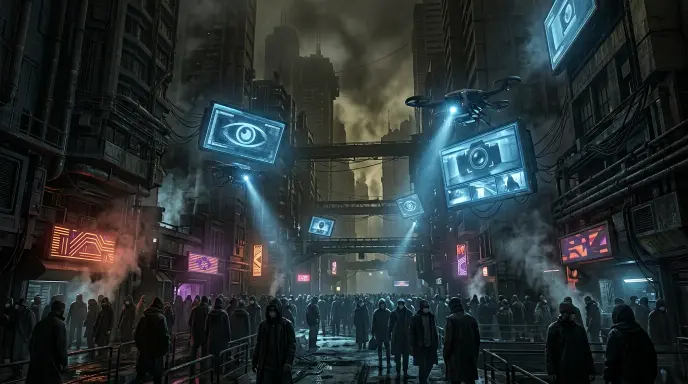
The word dystopia describes an imagined or real society where life is marked by oppression, suffering, fear, injustice, or extreme control. It often appears in novels, movies, academic essays, political discussions, and social commentary. Writers use it to describe worlds where governments abuse power, technology threatens freedom, or people struggle under unfair social systems.
Finding the right alternative depends on what you want to emphasize. Words such as nightmare society, oppressive regime, and totalitarian society can describe different aspects of a dystopia, but they are not always interchangeable. Some alternatives focus on government control, while others highlight suffering, disorder, or a frightening future. This guide explains the most useful synonyms for dystopia, their meanings, and how to use them naturally in formal writing, creative work, and everyday conversation.
Quick Answer
The closest alternatives to dystopia include nightmare society, oppressive society, totalitarian society, authoritarian state, bleak future, and dystopian world. Other expressions, such as police state, social nightmare, and society in decline, fit specific contexts. Choose an alternative based on whether you mean political oppression, social suffering, widespread disorder, or an imagined future where life has gone terribly wrong.
Quick List: 35+ Alternatives for Dystopia
Closest Alternatives
- Nightmare society
- Dystopian world
- Oppressive society
- Bleak society
- Dark future
- Nightmarish world
- Grim society
- Oppressive world
Formal and Academic Alternatives
- Totalitarian society
- Authoritarian state
- Repressive regime
- Police state
- Oppressive social order
- Coercive society
- Tyrannical regime
- Social breakdown
Neutral and Contextual Alternatives
- Society in decline
- Broken society
- Troubled society
- Disordered society
- Unjust society
- Failing society
- Society under oppression
- Social nightmare
Creative and Literary Alternatives
- Living nightmare
- Hellish world
- Bleak future world
- Dark imagined society
- Nightmarish civilization
- World of despair
- Civilization in ruins
- World without freedom
Casual Alternatives
- Terrible world
- A messed-up society
- A horrible place to live
- A world gone wrong
- A society from hell
- A frightening future
Remember that these expressions have different meanings. Dystopian world is a close equivalent, while police state focuses on government surveillance and control. Civilization in ruins suggests destruction rather than necessarily describing an oppressive political system.
Formal Alternatives to Dystopia
1. Totalitarian Society
Meaning: A society where the government attempts to control nearly every part of public and private life.
Explanation: This is a strong contextual alternative when a dystopian setting involves extreme state control, censorship, surveillance, and limited personal freedom. It is more specific than dystopia.
Example: The novel portrays a totalitarian society where citizens cannot express independent opinions.
Best Use: Academic essays, political analysis, and discussions of authoritarian fiction.
Worst Use: Avoid it when the main problem is environmental destruction or economic collapse without total government control.
Tone: Formal, political, and analytical.
2. Authoritarian State
Meaning: A country governed by leaders who restrict political freedom and public opposition.
Explanation: This phrase describes a political system rather than an entire fictional society. It works when government power is central to the dystopian setting.
Example: The film follows a family trying to escape an authoritarian state.
Best Use: Political commentary, essays, and stories about restricted civil liberties.
Worst Use: Do not use it as a complete substitute for every dystopian setting, especially one caused mainly by environmental or technological disasters.
Tone: Formal and precise.
3. Repressive Regime
Meaning: A government that uses force, restrictions, or punishment to suppress opposition.
Explanation: This expression emphasizes the actions of those in power. It can describe one important feature of a dystopia without referring to the whole society.
Example: Citizens secretly organize against the repressive regime.
Best Use: Political fiction, historical comparisons, and discussions of censorship.
Worst Use: It may be too narrow when the setting’s problems extend beyond government oppression.
Tone: Serious and critical.
4. Police State
Meaning: A state in which the government relies heavily on police power, surveillance, and restrictions to control citizens.
Explanation: A police state can be a feature of a dystopia, but the two terms are not identical. The first focuses on government enforcement and control.
Example: The story takes place in a police state where every public gathering is monitored.
Best Use: Fiction about surveillance, political repression, and the loss of civil liberties.
Worst Use: Avoid it when the society’s defining problem is poverty or environmental collapse rather than police control.
Tone: Formal and strongly critical.
5. Oppressive Social Order
Meaning: A system of social rules and institutions that limits people’s freedom or treats groups unfairly.
Explanation: This phrase emphasizes the structure of society rather than a particular government. It can describe class inequality, discrimination, or institutional restrictions in a dystopian setting.
Example: The protagonist challenges an oppressive social order that prevents people from choosing their own careers.
Best Use: Sociology, literary analysis, and discussions of inequality.
Worst Use: It may sound unnecessarily abstract in casual conversation.
Tone: Academic and analytical.
6. Coercive Society
Meaning: A society where people are pressured or forced to behave in particular ways.
Explanation: This alternative is useful when obedience is maintained through threats, punishment, or social pressure.
Example: The novel depicts a coercive society that punishes anyone who refuses to conform.
Best Use: Academic writing and stories about forced conformity.
Worst Use: Avoid it when the setting is frightening but people remain free to make their own choices.
Tone: Formal and precise.
7. Tyrannical Regime
Meaning: A government led by rulers who exercise cruel or oppressive power.
Explanation: This phrase emphasizes the rulers and their behavior rather than the whole dystopian world.
Example: The rebels risk their lives to overthrow the tyrannical regime.
Best Use: Political fiction, historical writing, and dramatic narratives.
Worst Use: It is less suitable for dystopias caused by climate disasters or uncontrolled technology without a tyrannical government.
Tone: Strong, dramatic, and critical.
8. Social Breakdown
Meaning: The weakening or collapse of the systems and relationships that help a society function.
Explanation: Social breakdown can occur in a dystopian setting, but it is not a direct synonym. A society may remain highly organized and still be dystopian.
Example: The novel explores social breakdown after essential services collapse.
Best Use: Academic analysis, disaster fiction, and discussions of social instability.
Worst Use: Avoid it when describing a highly controlled society that continues to function efficiently.
Tone: Neutral and analytical.
9. Bleak Future
Meaning: An imagined future with little hope, happiness, or improvement.
Explanation: This expression describes the outlook or atmosphere of a dystopia. It does not necessarily imply political oppression.
Example: The author imagines a bleak future shaped by climate disasters and resource shortages.
Best Use: Book reviews, creative writing, and discussions of speculative fiction.
Worst Use: It may be too general when you need to explain a specific political system.
Tone: Literary and serious.
10. Nightmarish Civilization
Meaning: A civilization characterized by frightening, disturbing, or deeply unpleasant conditions.
Explanation: This is a descriptive alternative rather than an established technical term. It works especially well when a dystopian world feels terrifying on a large scale.
Example: The film presents a nightmarish civilization where human emotions are treated as crimes.
Best Use: Literary criticism, reviews, and imaginative descriptions.
Worst Use: It may sound exaggerated in a neutral academic report.
Tone: Vivid and dramatic.
Semi-Formal and Neutral Alternatives
11. Nightmare Society
Meaning: A society that resembles a nightmare because of its suffering, injustice, or frightening conditions.
Explanation: This is one of the closest everyday alternatives to dystopia. It communicates the central idea without requiring specialized vocabulary.
Example: The author creates a nightmare society where citizens fear their own neighbors.
Best Use: School assignments, book reviews, and accessible explanations.
Worst Use: It may be less precise than totalitarian society in political analysis.
Tone: Clear and descriptive.
12. Dystopian World
Meaning: An imagined or depicted world characterized by deeply undesirable social conditions.
Explanation: This phrase is nearly interchangeable with dystopia in discussions of fiction. The word world emphasizes the setting.
Example: The game takes place in a dystopian world devastated by pollution.
Best Use: Movie reviews, novels, games, and speculative fiction.
Worst Use: It is repetitive if the surrounding paragraph already uses dystopian world several times.
Tone: Neutral and literary.
13. Oppressive Society
Meaning: A society that restricts freedom or subjects people to unfair treatment.
Explanation: This phrase works when oppression is a major feature of the setting. It does not automatically imply that every other aspect of society has collapsed.
Example: The story follows a young woman growing up in an oppressive society.
Best Use: Essays, social commentary, and character descriptions.
Worst Use: It may overlook environmental, technological, or economic problems that define the setting.
Tone: Neutral to critical.
14. Broken Society
Meaning: A society affected by serious problems that prevent it from functioning fairly or effectively.
Explanation: This phrase is broader and less literary than dystopia. It can describe a real society facing major difficulties or a fictional one.
Example: The novel depicts a broken society where wealth determines access to education.
Best Use: Accessible essays, commentary, and discussions of inequality.
Worst Use: Avoid it when you need to distinguish a fictional dystopia from real-world social problems precisely.
Tone: Direct and critical.
15. Troubled Society
Meaning: A society experiencing significant problems or instability.
Explanation: This expression is less extreme than dystopia. It can describe a society with serious challenges that has not necessarily become oppressive or nightmarish.
Example: The book explores a troubled society struggling with shortages and public distrust.
Best Use: Neutral reports, school writing, and general discussion.
Worst Use: It may understate the severity of a genuinely horrific setting.
Tone: Neutral and measured.
16. Unjust Society
Meaning: A society in which people face unfair treatment or unequal opportunities.
Explanation: This alternative highlights injustice rather than the full range of conditions associated with dystopia.
Example: The protagonist fights to change an unjust society that denies basic rights to certain groups.
Best Use: Social studies, essays, and discussions of inequality.
Worst Use: It may be too narrow when widespread violence, environmental destruction, or technological control is the central problem.
Tone: Clear and critical.
17. Failing Society
Meaning: A society whose institutions or systems are no longer meeting people’s needs.
Explanation: This phrase emphasizes deterioration. Unlike dystopia, it does not necessarily suggest an established nightmarish way of life.
Example: The story shows a failing society where hospitals and schools can no longer serve the public.
Best Use: Discussions of institutional decline and speculative fiction.
Worst Use: Avoid it if society is functioning efficiently but doing so through cruel or oppressive rules.
Tone: Neutral and analytical.
18. Society in Decline
Meaning: A society experiencing a gradual loss of stability, prosperity, or influence.
Explanation: This is a broader contextual alternative. Decline can lead to dystopian conditions, but not every declining society is dystopian.
Example: The novel begins in a society in decline as resources become harder to obtain.
Best Use: Historical comparisons, literary analysis, and stories about gradual collapse.
Worst Use: It is inaccurate when the society is already stable but intentionally oppressive.
Tone: Formal and descriptive.
19. Social Nightmare
Meaning: A situation in which social conditions become frightening or deeply distressing.
Explanation: This expressive phrase can describe a dystopian environment or a particularly harmful social system. It is less specific than the original term.
Example: The city becomes a social nightmare after its leaders introduce constant surveillance.
Best Use: Opinion pieces, book reviews, and vivid descriptions.
Worst Use: It may sound emotional rather than analytical in a research paper.
Tone: Emphatic and critical.
20. Dark Future
Meaning: An imagined future marked by danger, hardship, or a lack of hope.
Explanation: A dark future is a common theme in dystopian fiction, but it can also describe any pessimistic prediction about what lies ahead.
Example: The movie presents a dark future in which clean water is available only to the wealthy.
Best Use: Creative writing, entertainment reviews, and accessible discussions.
Worst Use: It may be too vague if the reader needs to understand the actual social structure.
Tone: Literary and accessible.
Informal and Casual Alternatives
21. A World Gone Wrong
Meaning: A world where things have developed in a harmful or frightening way.
Example: The film shows a world gone wrong after a powerful corporation takes control of the government.
When It Sounds Natural: Casual conversations, movie reviews, and informal descriptions of fictional settings.
When to Avoid It: Formal research papers and precise political analysis.
Tone: Conversational and expressive.
22. A Messed-Up Society
Meaning: A society with serious problems, unfair rules, or disturbing behavior.
Example: The game explores a messed-up society where the rich control every important resource.
When It Sounds Natural: Informal discussions, social media, and casual reviews.
When to Avoid It: Professional reports, academic essays, and formal presentations.
Tone: Casual and critical.
23. A Horrible Place to Live
Meaning: A place where daily life is extremely unpleasant or difficult.
Example: Constant fear and food shortages make the city a horrible place to live.
When It Sounds Natural: Everyday speech and simple descriptions.
When to Avoid It: Literary analysis that requires a precise term for a political or social system.
Tone: Direct and informal.
24. A Society from Hell
Meaning: An intensely unpleasant society characterized by extreme suffering or cruelty.
Example: The author imagines a society from hell where citizens are punished for minor mistakes.
When It Sounds Natural: Dramatic conversations, informal reviews, and expressive fiction.
When to Avoid It: Neutral reporting, professional communication, or writing that requires restrained language.
Tone: Emotional and exaggerated.
25. A Frightening Future
Meaning: A possible future that inspires fear or concern.
Example: The story warns readers about a frightening future shaped by uncontrolled artificial intelligence.
When It Sounds Natural: Casual discussions, presentations, and accessible writing.
When to Avoid It: When you need to identify an actual oppressive society rather than simply describe a feared possibility.
Tone: Conversational and serious.
True Synonyms vs. Contextual Alternatives
Not every phrase that describes a dystopia can replace the word in every sentence. The best choice depends on what the original sentence emphasizes.
| Type | What It Means | Can It Replace the Original? |
|---|---|---|
| True or very close synonym | A term with almost the same meaning in context | Usually, if the sentence still sounds natural |
| Near synonym | A term that shares much of the meaning | Sometimes |
| Contextual alternative | A phrase that describes one feature of the concept | Only when that feature matters |
| Broader expression | A general description of an undesirable society or future | Sometimes, but precision may be lost |
| Narrower expression | A specific type of social or political system | Only when that specific feature applies |
For example, nightmare society and dystopian world are close alternatives in many literary contexts. Police state is narrower because it focuses on government control. Society in decline is broader because a society can decline without becoming dystopian.
Industry-Specific Usage
Business Writing
Business writing rarely needs the word dystopia unless the subject involves future scenarios, technology, social risks, or a deliberately dramatic comparison.
Example: Instead of writing, “Automation could create a dystopia,” write, “Unregulated automation could lead to severe social inequality and reduced job security.”
The revised sentence identifies the actual concern rather than relying on a broad label.
Corporate Communication
In reports, policies, and internal announcements, use specific language to explain risks. Terms such as excessive surveillance, loss of employee privacy, and unfair workplace practices are usually more useful than dystopia.
Example: “The proposed monitoring system raises concerns about employee privacy and excessive oversight.”
Academic Writing
In literature, sociology, and political science, dystopia is an established term and often the best choice. Use more specific expressions when explaining its features.
Example: “The novel presents a dystopia characterized by censorship, surveillance, and social inequality.”
A strong academic paragraph defines the concept first and then identifies its particular features.
Legal Writing
Legal documents generally require precise descriptions of conduct, rights, obligations, and applicable rules. Dystopia is not usually a substitute for specific legal terms such as unlawful surveillance, discrimination, or abuse of authority.
Example: Instead of describing a policy as “dystopian,” identify the particular legal or procedural concern.
The correct legal terminology depends on the relevant facts and jurisdiction.
Email Communication
For professional emails, replace dramatic language with the specific concern you want to communicate.
- Instead of “This system is a dystopia,” write “This system creates serious privacy concerns.”
- Instead of “We are building a dystopian workplace,” write “The proposed changes could restrict employee autonomy.”
- Instead of “The future looks dystopian,” write “The current projections suggest significant social and economic risks.”
Specific language makes concerns easier to understand and discuss constructively.
Email Examples
1. Client Email: Privacy Concerns
Subject: Concerns About the Proposed Monitoring System
Hello Jordan,
After reviewing the proposed monitoring system, I have some concerns about employee privacy and the amount of oversight it would introduce. Could we discuss ways to protect sensitive information while meeting the project’s security requirements?
Best,
Alex
2. Internal Workplace Email: Employee Autonomy
Subject: Feedback on the New Workplace Policy
Hi Team,
I reviewed the draft policy and believe some sections could unnecessarily limit employee autonomy. I recommend clarifying which monitoring practices are essential and which can be removed.
Please share your feedback before Friday.
Thanks,
Morgan
3. Academic Email: Literary Analysis
Subject: Question About My Essay Topic
Dear Professor Lee,
I am writing an essay about how surveillance shapes the oppressive society in our assigned novel. Would it be appropriate to compare the fictional government with real examples of state surveillance?
Thank you for your guidance.
Sincerely,
Taylor
4. Project Update: Social Risks
Subject: Update on the Automation Risk Assessment
Hello Everyone,
The latest assessment highlights potential risks involving job displacement, unequal access to technology, and reduced privacy. Rather than describing the projected outcome broadly as a dystopia, I am documenting each risk separately so that we can evaluate possible solutions.
Best,
Casey
5. Vendor Email: Data Protection
Subject: Request for Details on Data Protection
Hello Sam,
Before we approve the software purchase, could you provide details about how the platform collects, stores, and monitors user data? We want to ensure that the proposed system meets our privacy requirements.
Thank you,
Riley
Short Dialogue Examples
1. Workplace
Person A: The new monitoring rules seem extreme.
Person B: I agree. The bigger concern is the loss of employee privacy.
2. Classroom
Person A: Why is the novel considered dystopian?
Person B: Because its government controls information and punishes independent thinking.
3. Customer Service
Person A: I feel like the system is a nightmare to use.
Person B: I’m sorry about that. Let’s identify the issue and find a simpler solution.
4. Casual Conversation
Person A: What did you think of the movie?
Person B: It showed a frightening future where technology controlled people’s lives.
5. Literary Discussion
Person A: Can I call the setting a police state?
Person B: Yes, if government surveillance and police power are central to the story. Otherwise, dystopian society may be more accurate.
How to Replace “Dystopia” in a Sentence
Example 1
Original: The novel describes a dystopia.
Alternative: The novel describes a nightmare society.
Why it works: Both phrases suggest deeply undesirable living conditions, although nightmare society is more descriptive and less technical.
Example 2
Original: The story takes place in a dystopia controlled by the government.
Alternative: The story takes place in a totalitarian society controlled by the government.
Why it works: The replacement emphasizes government control. Use it only if the government attempts to dominate most aspects of life.
Example 3
Original: The film presents a dystopia shaped by surveillance.
Alternative: The film presents a police state shaped by surveillance.
Why it works: The alternative highlights policing and surveillance, but it is narrower than dystopia.
Example 4
Original: The author imagines a dystopia caused by climate change.
Alternative: The author imagines a bleak future caused by climate change.
Why it works: Bleak future emphasizes hardship and hopelessness rather than a particular social structure.
Example 5
Original: The book explores a dystopia built on inequality.
Alternative: The book explores an unjust society built on inequality.
Why it works: The revised sentence focuses on unfair treatment. It may lose the sense of a fully developed dystopian setting.
Example 6
Original: The game allows players to explore a dystopia.
Alternative: The game allows players to explore a dystopian world.
Why it works: This is a close alternative that sounds natural when discussing a game’s setting.
Example 7
Original: The series portrays a dystopia where citizens cannot speak freely.
Alternative: The series portrays an oppressive society where citizens cannot speak freely.
Why it works: Oppressive society directly describes restrictions on freedom without implying that every aspect of society has collapsed.
Example 8
Original: The writer warns that uncontrolled technology could create a dystopia.
Alternative: The writer warns that uncontrolled technology could create a frightening future.
Why it works: The alternative is accessible and conversational, but less precise about the social system that might emerge.
Example 9
Original: The novel’s dystopia reflects deep social divisions.
Alternative: The novel’s broken society reflects deep social divisions.
Why it works: Broken society emphasizes social dysfunction, but it may sound less specific than the original term.
Example 10
Original: The story depicts a dystopia after the collapse of public institutions.
Alternative: The story depicts a society in decline after the collapse of public institutions.
Why it works: The alternative emphasizes deterioration. If the setting also involves systematic oppression or other defining dystopian features, dystopia may remain the better word.
Comparison Table
| Phrase | Tone | Meaning / Scope | Best Use | Example |
|---|---|---|---|---|
| Dystopian world | Neutral | Undesirable imagined society | Fiction | The game depicts a dystopian world. |
| Nightmare society | Descriptive | Society marked by suffering | General writing | The novel creates a nightmare society. |
| Totalitarian society | Formal | Extreme government control | Political fiction | Citizens live in a totalitarian society. |
| Authoritarian state | Formal | State with restricted political freedom | Political analysis | The family escapes an authoritarian state. |
| Police state | Critical | Extensive police power and surveillance | Government control | The story takes place in a police state. |
| Oppressive society | Neutral to critical | Society that restricts freedom | Essays and reviews | She challenges an oppressive society. |
| Unjust society | Neutral | Society marked by unfairness | Social analysis | The hero fights an unjust society. |
| Broken society | Conversational | Society with serious systemic problems | General commentary | The story portrays a broken society. |
| Bleak future | Literary | A future with little hope | Speculative fiction | The film imagines a bleak future. |
| Society in decline | Analytical | Society experiencing deterioration | Essays and reports | The novel explores a society in decline. |
| Social nightmare | Expressive | Frightening social conditions | Reviews and commentary | The city becomes a social nightmare. |
| World gone wrong | Casual | A world with deeply harmful conditions | Conversation | The film shows a world gone wrong. |
Which Alternative Should You Choose?
For Formal Writing
Choose totalitarian society, authoritarian state, or oppressive social order when those descriptions accurately reflect the setting. They sound precise and analytical.
For Business Communication
Describe the actual concern, such as excessive surveillance, loss of privacy, social inequality, or institutional failure. These expressions are more actionable than dystopia.
For Academic Writing
Keep dystopia when discussing a recognized literary or social concept. Use specific alternatives to explain the concept’s features rather than replacing it unnecessarily.
For Legal Writing
Identify the exact issue, such as discrimination, unlawful monitoring, or abuse of authority, when supported by the facts. Avoid using dramatic descriptions in place of precise legal language.
For Professional Emails
Use clear, neutral expressions such as serious privacy concerns, oppressive conditions, or risks to employee autonomy. State what happened and what action you recommend.
For Everyday Conversation
Use nightmare society, terrible world, or a world gone wrong. These phrases are easy to understand and do not require specialized knowledge.
For Casual Messages
A messed-up society or a frightening future can communicate your reaction naturally. Avoid these expressions in contexts where careful analysis or a professional tone is expected.
Grammar and Usage Guide
Is “Dystopia” a Noun?
Yes. Dystopia is a countable noun when it refers to an imagined or described society.
- Singular: The novel depicts a dystopia.
- Plural: The course examines several dystopias in modern fiction.
The plural form is dystopias.
How to Use “Dystopian”
Dystopian is the adjective form. It describes something related to a dystopia.
- Correct: The author created a dystopian society.
- Correct: The movie explores dystopian themes.
- Incorrect: The author created a dystopia society.
Use dystopia as a noun and dystopian as an adjective.
Common Word Combinations
These combinations are natural:
- Dystopian novel
- Dystopian fiction
- Dystopian future
- Dystopian society
- Dystopian government
- Dystopian setting
- Dystopian world
For example: “The novel uses a dystopian setting to examine the dangers of unchecked power.”
Prepositions and Sentence Structure
Use in when describing life inside a dystopian society.
Example: “People in the dystopia struggle to access reliable information.”
Use about when discussing a story’s subject.
Example: “The novel is about a dystopia controlled by artificial intelligence.”
Use of when referring to the features or nature of a dystopia.
Example: “The author explores the dangers of a dystopia built on fear.”
Capitalization
Write dystopia in lowercase unless it begins a sentence or appears in a title where title case is appropriate.
- Correct: The story presents a dystopia.
- Correct: Dystopia is a major theme in the novel.
- Title: Dystopia and the Loss of Freedom
Choosing Between “Dystopia” and “Dystopian”
Use the noun for the society itself and the adjective to describe a related person, place, work, or feature.
- Noun: The story depicts a dystopia.
- Adjective: The story depicts a dystopian society.
These constructions are related but not grammatically interchangeable.
Common Mistakes to Avoid
1. Treating Every Alternative as an Exact Synonym
A police state emphasizes police power, while a dystopia may be defined by environmental destruction or social inequality. Choose a term that matches the actual setting.
2. Confusing “Dystopia” with “Utopia”
A utopia is an imagined ideal society; a dystopia is an undesirable one. The two concepts contrast with each other.
3. Using “Authoritarian State” Too Broadly
Not every dystopia involves an authoritarian government. Some focus on disasters, corporate power, resource scarcity, or technological threats.
4. Using Overly Dramatic Language in Formal Writing
Calling a policy a society from hell may sound emotional rather than analytical. Explain the specific problem instead.
5. Using “Society in Decline” for Every Dystopia
A dystopian society may be highly organized and technologically advanced. Decline is not required for a society to be dystopian.
6. Confusing the Noun and Adjective
Write a dystopia or a dystopian world, not a dystopia world.
7. Ignoring the Intended Audience
A casual phrase may suit a movie review but weaken an academic essay. Match your vocabulary to the reader and purpose.
8. Repeating “Dystopian World” Too Often
Repetition can make writing dull. Alternate with accurate descriptions such as oppressive society, totalitarian society, or bleak future when the context supports them.
When Not to Use the Original Word
1. When You Mean a Specific Political System
Use totalitarian society, authoritarian state, or police state if the particular system is central to your point.
2. When You Mean a General Problem
A society facing economic hardship is not automatically a dystopia. Phrases such as troubled society or society in decline may be more accurate.
3. When You Need Clear Professional Language
Replace a broad claim about dystopia with the actual concern, such as loss of privacy, unequal access to resources, or restrictions on freedom.
4. When You Are Writing for a Younger Audience
A frightening future or a world gone wrong may explain the idea more clearly than a specialized literary term.
5. When You Want to Emphasize Mood
Use bleak future, nightmarish world, or social nightmare if atmosphere is more important than political structure.
6. When the Original Word Is More Accurate
Keep dystopia when analyzing dystopian literature, comparing utopias and dystopias, or discussing the concept as a recognized genre. A simpler phrase is not always a better replacement.
Advanced Writer Tips
Tone Control
For a formal tone, use totalitarian society or oppressive social order when appropriate. For a neutral tone, choose troubled society or society in decline. Also For a conversational tone, try a world gone wrong.
Professional Email Etiquette
Avoid using dramatic labels when you can describe the issue directly. Instead of saying, “This policy creates a dystopia,” explain how it affects privacy, autonomy, or fairness.
Politeness
In professional discussions, describe the effect of a decision rather than attacking the people who made it. “The policy may restrict employee freedom” sounds more constructive than “The company is creating a dystopia.”
Context Alignment
Ask yourself what makes the society undesirable. Is it government control, economic inequality, environmental destruction, or the loss of personal freedom? Your answer should guide your word choice.
Precision
Use the narrowest accurate term. If surveillance is the main issue, police state may be useful. If several social systems have become oppressive, dystopia or oppressive society may fit better.
Readability
Do not replace a short, clear word with a complicated phrase merely to sound sophisticated. “The novel depicts a dystopia” is often stronger than “The novel presents an undesirable social order characterized by widespread dysfunction.”
Related Questions
What Is Another Way to Say Dystopia?
Nightmare society, dystopian world, oppressive society, and bleak future are useful alternatives. The best choice depends on whether you want to emphasize the society itself, its political structure, or its atmosphere.
What Is a Professional Alternative to Dystopia?
In professional writing, describe the actual concern. Use excessive surveillance, systemic inequality, institutional failure, or restrictions on individual freedom when these terms accurately represent the situation.
What Is a Formal Alternative to Dystopia?
Totalitarian society, authoritarian state, and oppressive social order are formal alternatives for specific contexts. They are not universal replacements because each describes a different feature of society.
Is Dystopia a Formal Word?
Yes. Dystopia is an established term used in literature, academic writing, and discussions of social or political systems. It is also common in everyday conversations about books, movies, and imagined futures.
Can I Use “Police State” Instead of “Dystopia”?
Sometimes. A police state emphasizes extensive police power and government surveillance. Use it when those features define the setting, not when the main issue is unrelated environmental or economic destruction.
What Is the Difference Between Dystopia and Utopia?
A utopia represents an imagined ideal society, while a dystopia represents a deeply undesirable society. Writers often use these contrasting concepts to explore ideas about power, freedom, equality, and human behavior.
What Is the Difference Between a Dystopia and a Post-Apocalyptic World?
A dystopia focuses on undesirable social conditions, while a post-apocalyptic world describes life after a major civilization-ending or civilization-changing disaster. A post-apocalyptic setting can also be dystopian, but the terms emphasize different things.
FAQs
1. What Are the Closest Synonyms for Dystopia?
The closest alternatives include nightmare society, dystopian world, and oppressive society. Each communicates undesirable social conditions, although oppressive society focuses more specifically on restrictions and unfair treatment.
2. What Is the Opposite of Dystopia?
The most common opposite is utopia, an imagined ideal society. Other expressions, such as ideal society or perfect world, can work in ordinary writing, but utopia is the established term.
3. Is “Nightmare Society” the Same as “Dystopia”?
They are close in meaning but differ in tone. Nightmare society is a descriptive phrase that emphasizes suffering and fear, while dystopia is a recognized term for an undesirable imagined or depicted society.
4. Can Dystopia Describe a Real Society?
Yes, it can be used figuratively to criticize real social conditions. However, the word is evaluative, so formal writing should explain the specific conditions being criticized rather than relying on the label alone.
5. What Is a Dystopian Future?
A dystopian future is an imagined future in which society has developed in deeply harmful ways. Common themes include authoritarian control, environmental destruction, extreme inequality, and the misuse of technology.
6. Is “Dark Future” a True Synonym for Dystopia?
Not exactly. A dark future describes a frightening or hopeless outlook, while a dystopia refers to an undesirable society or social order. The expressions overlap when a dystopian setting is presented as a possible future.
7. How Can I Avoid Repeating the Word Dystopia in an Essay?
Use dystopian society, oppressive social order, nightmare society, or a specific description of the setting when appropriate. Do not rotate terms mechanically; repeat dystopia when it is the clearest and most accurate choice.
Key Takeaways
- Dystopia describes an undesirable society, often marked by oppression, suffering, or extreme control.
- Nightmare society and dystopian world are close alternatives for general literary discussion.
- Totalitarian society, police state, and authoritarian state describe specific political conditions rather than every type of dystopia.
- Choose neutral or precise wording in academic and professional writing, especially when discussing real social problems.
- Keep the original word when it expresses the concept more accurately than a replacement.
Conclusion
Choosing the right alternative to dystopia means understanding which part of the concept you want to emphasize. Nightmare society works well for accessible descriptions, while dystopian world is a natural choice for books, movies, and games. When government control is central, terms such as totalitarian society, authoritarian state, and police state offer greater precision. For discussions of unfairness or institutional problems, oppressive society, unjust society, and society in decline may communicate the intended meaning more clearly.
Writers should also consider tone and audience. A phrase such as a world gone wrong sounds natural in casual conversation, but a formal essay may benefit from a more exact description. Similarly, professional communication is often stronger when it identifies specific concerns, such as surveillance, inequality, or restricted freedom. Before replacing the original word, ask whether the alternative preserves the meaning of your sentence. The best synonym is not the most dramatic or sophisticated expression; it is the one that helps readers understand the idea accurately and naturally.