
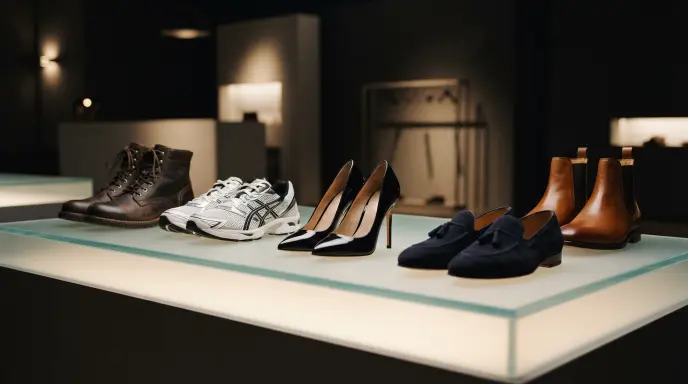
The word shoes is a common term for footwear worn to protect and cover the feet. Depending on the context, however, you may want a more specific word such as footwear, boots, sneakers, sandals, or dress shoes. The best alternative depends on the type of footwear, setting, audience, and level of formality.
Knowing different words for shoes can make your writing more precise and natural. A product description may need footwear, a sports article may use sneakers, while a casual conversation may simply say kicks. This guide explains the closest synonyms and related terms, how they differ, and when to use each one.
Quick Answer
Common synonyms and alternatives for shoes include footwear, footwear items, boots, sneakers, trainers, sandals, loafers, slippers, pumps, heels, flats, moccasins, oxfords, dress shoes, work shoes, running shoes, and kicks. Some are broad alternatives, while others describe specific types of footwear rather than shoes in general.
Quick List: Synonyms and Alternatives for Shoes
Here are useful alternatives, grouped by meaning and context:
Closest and Broad Alternatives
- Footwear
- Footgear
- Shoes
- Footwear items
- Foot coverings
Formal or Professional Terms
- Footwear
- Dress shoes
- Formal footwear
- Professional footwear
- Occupational footwear
- Protective footwear
- Work footwear
Common Types of Shoes
- Sneakers
- Trainers
- Boots
- Sandals
- Loafers
- Slippers
- Flats
- Pumps
- Heels
- Oxfords
- Brogues
- Moccasins
- Espadrilles
- Clogs
- Ballet flats
Casual Alternatives
- Kicks
- Sneakers
- Trainers
- Footwear
- Shoes
Purpose-Specific Terms
- Running shoes
- Hiking boots
- Work boots
- Safety shoes
- Athletic shoes
- Walking shoes
- Dress shoes
- School shoes
Formal Alternatives for Shoes
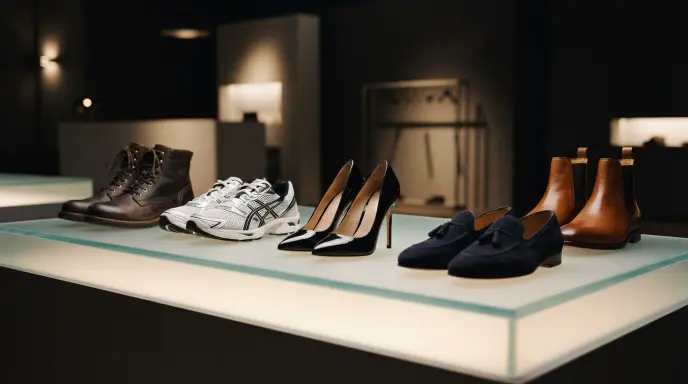
Footwear
Meaning: A broad term referring to items worn on the feet.
Explanation: Footwear is the closest broad alternative to shoes. Unlike shoes, it can include boots, sandals, slippers, and other types of items worn on the feet.
Example:
“The company sells high-quality footwear for men and women.”
Best Use: Product descriptions, business writing, retail, fashion, and professional communication.
Worst Use: Very casual conversation, where simply saying shoes usually sounds more natural.
Tone: Neutral to formal.
Footgear
Meaning: Equipment or coverings worn on the feet.
Explanation: Footgear can refer to shoes and similar items, but it is much less common than footwear.
Example:
“Proper footgear is recommended for the hiking trail.”
Best Use: Specialized descriptions or writing where a broad term for footwear is useful.
Worst Use: Everyday conversation, where it may sound unusual.
Tone: Formal or technical.
Formal Footwear
Meaning: Shoes designed for formal or dressy occasions.
Explanation: This is not an exact synonym for all shoes. It specifically refers to footwear suitable for events such as weddings, ceremonies, business meetings, or formal dinners.
Example:
“Guests should wear appropriate formal footwear to the ceremony.”
Best Use: Dress codes, fashion guides, event instructions.
Worst Use: Referring to sneakers, beach sandals, or casual shoes.
Tone: Formal and specific.
Professional Footwear
Meaning: Footwear suitable for a professional environment.
Explanation: This phrase describes shoes based on their setting rather than their physical design.
Example:
“Employees are expected to wear clean, professional footwear.”
Best Use: Workplace policies and business communication.
Worst Use: Casual conversations about what someone is wearing.
Tone: Professional.
Protective Footwear
Meaning: Footwear designed to protect the feet from particular hazards.
Explanation: This is narrower than shoes. It can include safety shoes, reinforced boots, and other protective designs.
Example:
“Protective footwear must be worn in the workshop.”
Best Use: Workplace safety instructions and industrial contexts.
Worst Use: Fashion or everyday footwear discussions.
Tone: Technical and professional.
Occupational Footwear
Meaning: Footwear designed for a particular job or work environment.
Explanation: This term emphasizes function and occupation rather than appearance.
Example:
“The company provides occupational footwear for warehouse employees.”
Best Use: Workplace policies, safety documentation, and product descriptions.
Worst Use: Casual conversations.
Tone: Technical and formal.
Dress Shoes
Meaning: Shoes designed for formal or polished clothing.
Explanation: Dress shoes are a type of shoe, not a complete synonym for all shoes.
Example:
“He wore black dress shoes with his suit.”
Best Use: Formal clothing, weddings, offices, and events.
Worst Use: Referring generally to sneakers or sandals.
Tone: Neutral and polished.
Professional Shoes
Meaning: Shoes suitable for professional settings.
Explanation: This phrase focuses on appearance or workplace suitability rather than a specific shoe design.
Example:
“She bought a pair of professional shoes for her new job.”
Best Use: Workplace and career-related writing.
Worst Use: Technical descriptions where a more precise term is available.
Tone: Professional and neutral.
Work Footwear
Meaning: Footwear intended for work.
Explanation: Work footwear can include many different styles, from office shoes to safety boots.
Example:
“Choose comfortable work footwear if you spend most of the day standing.”
Best Use: Workplace advice and retail descriptions.
Worst Use: Formal fashion writing if a more specific term is needed.
Tone: Neutral and practical.
Foot Coverings
Meaning: Items that cover or protect the feet.
Explanation: This is a broad descriptive expression rather than a natural everyday synonym for shoes.
Example:
“Traditional foot coverings varied widely between cultures.”
Best Use: Historical, cultural, or descriptive writing.
Worst Use: Everyday shopping or conversation.
Tone: Formal and descriptive.
Semi-Formal and Neutral Alternatives

Sneakers
Meaning: Comfortable shoes commonly designed for casual wear or sports.
Example:
“He bought new sneakers for walking.”
Best Use: American English, casual writing, retail, and sports.
Worst Use: Formal documents when the general term footwear is more appropriate.
Tone: Neutral to casual.
Trainers
Meaning: Shoes, especially athletic shoes; also the common British English term for sneakers.
Example:
“She wore comfortable trainers to the gym.”
Best Use: British English and sports contexts.
Worst Use: When writing specifically for an American audience if clarity matters.
Tone: Neutral and casual.
Boots
Meaning: Footwear that generally extends above the foot and covers at least part of the lower leg.
Example:
“He wore waterproof boots during the hike.”
Best Use: Outdoor activities, work, fashion, and cold weather.
Worst Use: Referring to ordinary low-cut shoes.
Tone: Neutral.
Sandals
Meaning: Open footwear that leaves much of the foot exposed.
Example:
“She wore sandals to the beach.”
Best Use: Warm weather, casual clothing, and outdoor activities.
Worst Use: Formal or cold-weather contexts unless the specific style is appropriate.
Tone: Neutral and casual.
Loafers
Meaning: Slip-on shoes, usually with a relatively low heel and no laces.
Example:
“He paired brown loafers with his trousers.”
Best Use: Smart-casual and professional clothing.
Worst Use: As a general substitute for all shoes.
Tone: Polished and neutral.
Slippers
Meaning: Soft, comfortable footwear usually worn indoors.
Example:
“She put on her slippers after coming home.”
Best Use: Homewear and comfort.
Worst Use: Referring to outdoor shoes unless the specific style is designed for outdoor use.
Tone: Casual.
Flats
Meaning: Shoes with little or no heel.
Example:
“She chose black flats for a long day at work.”
Best Use: Fashion and women’s footwear descriptions.
Worst Use: Referring to high-heeled or thick-soled shoes.
Tone: Neutral and fashion-oriented.
Pumps
Meaning: A type of women’s dress shoe, often with a closed toe and raised heel.
Example:
“She wore classic black pumps to the interview.”
Best Use: Fashion, professional clothing, and formal occasions.
Worst Use: General references to men’s or casual footwear.
Tone: Formal and fashion-oriented.
Oxfords
Meaning: A style of traditionally formal lace-up shoe with a closed-lacing system.
Example:
“He wore polished Oxford shoes with his suit.”
Best Use: Formal and professional menswear.
Worst Use: As a general word for every type of shoe.
Tone: Formal and traditional.
Brogues
Meaning: Shoes decorated with perforations or decorative punched patterns.
Example:
“His brown brogues added detail to the outfit.”
Best Use: Fashion writing and traditional footwear descriptions.
Worst Use: General references to shoes without that design.
Tone: Stylish and specific.
Moccasins
Meaning: A style of soft shoe traditionally associated with Native American footwear designs and now also used for various modern shoe styles.
Example:
“He wore leather moccasins with casual trousers.”
Best Use: Specific footwear descriptions.
Worst Use: As a generic replacement for shoes.
Tone: Neutral and descriptive.
Informal and Casual Alternatives
Kicks
Meaning: A slang term for shoes.
Example:
“Those are some cool kicks.”
When It Sounds Natural: Casual conversations, social media, fashion discussions, and youth-oriented writing.
When to Avoid It: Academic writing, formal emails, legal documents, and professional policies.
Tone: Very casual and slang-like.
Sneakers
Meaning: Casual or athletic shoes.
Example:
“I need new sneakers for the weekend.”
When It Sounds Natural: Everyday American English.
When to Avoid It: When you mean a different specific type of footwear.
Tone: Casual and neutral.
Trainers
Meaning: Athletic shoes, particularly in British English.
Example:
“I left my trainers at the gym.”
When It Sounds Natural: British English and sports-related conversations.
When to Avoid It: When the audience may interpret trainer primarily as a person who provides instruction.
Tone: Casual and neutral.
Footwear
Meaning: A broad term for shoes and related items.
Example:
“Your footwear looks great.”
When It Sounds Natural: Shopping, fashion, and general conversation.
When to Avoid It: If you are deliberately aiming for very casual language.
Tone: Neutral.
True Synonyms vs. Contextual Alternatives
Not every word in a list of “synonyms for shoes” can replace shoes in every sentence.
| Type | What It Means | Can It Replace the Original? |
|---|---|---|
| True synonym | A word with essentially the same broad meaning | Sometimes; footwear is the closest broad alternative |
| Near synonym | A related word with overlapping meaning | Only in suitable contexts |
| Contextual alternative | A word appropriate for a particular situation | Yes, but only in that context |
| Broader expression | A term covering shoes plus other items | Yes, when broader meaning is intended |
| Narrower expression | A specific type of shoe | Only when that specific type is meant |
For example, footwear can often replace shoes because it is broad enough to cover many types of foot coverings. But boots, sandals, and sneakers are not true synonyms. They are specific categories of footwear.
Industry-Specific Usage
Business Writing
In business writing, footwear is usually more suitable than casual terms such as kicks.
Example:
“The company specializes in affordable footwear for everyday use.”
For product catalogs, footwear, dress shoes, work shoes, and protective footwear can provide more precision than simply saying shoes.
Corporate Communication
Corporate documents often benefit from functional terms.
Example:
“Employees working in the production area must wear appropriate protective footwear.”
Here, protective footwear communicates a specific requirement that shoes does not.
Academic Writing
Academic writing usually favors footwear when discussing shoes as a broad category.
Example:
“The study examines how footwear design affects comfort during prolonged walking.”
If the paper concerns a particular style, use the specific term instead.
Example:
“The research compared running shoes with traditional walking shoes.”
Customer Service
Customer service writing should be clear rather than overly technical.
Example:
“Please select your preferred footwear size before completing your order.”
For a direct conversation, however, shoe size may sound more natural.
Legal Writing
Legal and policy documents often need precise terms such as footwear, protective footwear, or safety footwear.
Example:
“Employees must wear approved protective footwear in designated areas.”
The correct term depends on the document and its defined requirements. A casual term such as kicks should not replace a precise term in a formal policy.
Email Communication
Professional emails usually work well with shoes, footwear, or a specific category.
Examples:
- “Please bring appropriate footwear.”
- “The required safety footwear must be worn.”
- “Your shoes are ready for collection.”
- “We recommend comfortable walking shoes.”
Email Examples
Email 1: Client Communication
Subject: Footwear Options for Your Order
Hello Sarah,
Thank you for your interest in our footwear collection.
We have several styles available in your preferred size, including formal footwear, casual sneakers, and walking shoes. I have attached the current options for you to review.
Please let me know if you would like information about any specific style.
Best,
Daniel
Email 2: Workplace Update
Subject: Required Protective Footwear
Hello Team,
Please remember that protective footwear is required in the workshop area starting Monday.
If you need a replacement pair or have questions about the approved options, please contact the office before your next shift.
Thank you,
Maria
Email 3: Customer Service
Subject: Your Shoe Order
Hello James,
Your shoes have been packed and are scheduled for dispatch today.
You will receive a tracking update once the package has been collected by the delivery service.
Thank you for shopping with us.
Best regards,
Customer Support
Email 4: Academic Communication
Subject: Appropriate Footwear for the Field Trip
Dear Students,
For Thursday’s field trip, please wear comfortable footwear suitable for walking on uneven ground.
Closed-toe walking shoes are recommended. Avoid open sandals or footwear that may become uncomfortable during extended walking.
Regards,
Ms. Carter
Email 5: Vendor Communication
Subject: Footwear Samples
Hello Michael,
We received the latest footwear samples this morning.
The overall design looks promising, but we would like to review the sole construction before moving forward. Please send the technical specifications for the current sample when convenient.
Best,
Andrew
Short Dialogue Examples
Workplace
Person A: Do I need special shoes for the workshop?
Person B: Yes. Protective footwear is required in that area.
Classroom
Person A: What should we wear for the field trip?
Person B: Comfortable walking shoes should be fine.
Customer Service
Person A: Are these shoes available in size 10?
Person B: Yes, we have them in stock in both black and brown.
Casual Conversation
Person A: Where did you get those kicks?
Person B: I found them at a store downtown.
Professional Discussion
Person A: Which footwear would you recommend for the event?
Person B: A simple pair of dress shoes would work well.
How to Replace “Shoes” in a Sentence
Example 1
Original:
“He bought new shoes for running.”
Alternative:
“He bought new running shoes.”
Why it works:
The alternative is more precise because it identifies the purpose of the footwear.
Example 2
Original:
“Employees must wear shoes in the workshop.”
Alternative:
“Employees must wear protective footwear in the workshop.”
Why it works:
The revised version makes the safety requirement clearer.
Example 3
Original:
“She sells shoes online.”
Alternative:
“She sells footwear online.”
Why it works:
Footwear sounds slightly broader and more suitable for retail or business writing.
Example 4
Original:
“He wore shoes with his suit.”
Alternative:
“He wore dress shoes with his suit.”
Why it works:
The alternative identifies the intended style.
Example 5
Original:
“She bought comfortable shoes for the beach.”
Alternative:
“She bought sandals for the beach.”
Why it works:
Sandals provides a more specific description if the footwear is open.
Example 6
Original:
“He bought shoes for the hike.”
Alternative:
“He bought hiking boots for the trail.”
Why it works:
The new wording identifies the footwear and its intended use.
Example 7
Original:
“Those are nice shoes.”
Alternative:
“Those are nice sneakers.”
Why it works:
This works when the footwear is specifically a sneaker.
Example 8
Original:
“Put your shoes by the door.”
Alternative:
“Put your footwear by the door.”
Why it works:
Although grammatically correct, footwear sounds more formal. In ordinary conversation, shoes is usually more natural.
Comparison Table
| Phrase | Tone | Meaning / Scope | Best Use | Example |
|---|---|---|---|---|
| Shoes | Neutral | General term for footwear | Everyday use | “I need new shoes.” |
| Footwear | Neutral/formal | Broad category of items worn on feet | Business and general writing | “We sell footwear.” |
| Sneakers | Casual/neutral | Athletic or casual shoes | Everyday and sports | “These sneakers are comfortable.” |
| Trainers | Casual/neutral | Athletic shoes, especially British English | Sports and British English | “My trainers are wet.” |
| Boots | Neutral | Footwear extending above the foot | Outdoor and fashion | “She wore hiking boots.” |
| Sandals | Neutral | Open footwear | Warm weather | “He wore sandals.” |
| Loafers | Polished | Slip-on shoe style | Smart-casual clothing | “He wore loafers.” |
| Dress shoes | Formal | Shoes intended for formal clothing | Business and events | “Wear dress shoes.” |
| Protective footwear | Technical | Footwear designed for protection | Workplace safety | “Protective footwear is required.” |
| Kicks | Slang | Casual term for shoes | Informal conversation | “Nice kicks!” |
Which Alternative Should You Choose?
For formal writing: Use footwear or a precise term such as formal footwear.
For business communication: Use footwear, work footwear, or the exact shoe category.
Also For academic writing: Use footwear when discussing shoes broadly, and specific terms when comparing types.
For legal or workplace policies: Choose a precise term such as protective footwear or safety footwear when that is what the rule requires.
For professional emails: Shoes and footwear are both appropriate. Choose based on how specific or formal the message needs to be.
For everyday conversation: Shoes is usually the most natural choice.
For casual messages: Sneakers, trainers, or kicks may work when they accurately describe the footwear and match the audience.
Grammar and Usage Guide
Is “Shoes” Singular or Plural?
Shoes is the plural form of shoe.
- Singular: “I bought a new shoe.”
- Plural: “I bought new shoes.”
When talking about a pair, use a pair of shoes.
Example:
“She bought a new pair of shoes.”
“Shoe” vs. “Shoes”
Use shoe when referring to one item.
Example:
“One shoe is missing.”
Use shoes when referring to two or more.
Example:
“My shoes are under the bed.”
“Footwear” Is Usually Uncountable
Footwear is generally used as an uncountable noun.
Natural:
“The store sells footwear.”
Less natural:
“The store sells footwares.”
Do not normally add -s to footwear.
“Pair of Shoes”
When emphasizing two matching shoes, pair is useful.
- “I bought a pair of shoes.”
- “This pair of shoes is comfortable.”
Common Prepositions
Use in with footwear as part of what someone is wearing:
- “She was in black shoes.”
Use with when describing something worn alongside clothing:
- “He wore a suit with brown shoes.”
Also Use for when describing purpose:
- “These shoes are for running.”
Use to when describing an action involving the footwear:
- “He went to the store to buy shoes.”
American and British English
In American English, sneakers is common for athletic shoes.
In British English, trainers is commonly used for the same general category.
Both are correct; audience matters.
Common Mistakes to Avoid
1. Calling Every Type of Footwear “Sneakers”
Sneakers are one category of footwear. Boots, sandals, loafers, and dress shoes should not automatically be called sneakers.
2. Treating “Footwear” as Exactly the Same as “Shoes”
Footwear is broader. It can include shoes, boots, sandals, slippers, and other items.
3. Using “Kicks” in Formal Writing
Kicks is slang. It works in casual conversation but can sound inappropriate in a business report or academic paper.
4. Using “Trainers” Without Considering the Audience
In British English, trainers commonly means athletic shoes. In other contexts, trainer may be understood as a person who provides training.
5. Using “Boots” as a General Synonym
Boots describe a particular style of footwear. They should not replace shoes unless the footwear is actually boots.
6. Writing “Footwares”
The normal noun is footwear, not footwares.
7. Choosing a Specific Term Without Knowing the Shoe Type
Calling something a loafer, pump, Oxford, or sandal when its design does not fit that category can make the description inaccurate.
8. Making Professional Writing Too Formal
Replacing every instance of shoes with footwear can make simple writing sound unnecessarily technical.
When Not to Use the Original Word “Shoes”
Although shoes is perfectly natural, there are situations where a more precise alternative helps.
When You Need a Broader Category
Use footwear when you are discussing shoes, boots, sandals, and similar products together.
When Safety Matters
Use protective footwear or another accurate safety term when the purpose is protection.
When the Type Matters
Use running shoes, hiking boots, sandals, or another specific term when the type affects the meaning.
When Writing Product Descriptions
Specific terms can tell shoppers more than the general word shoes.
When Discussing Fashion
Terms such as loafers, pumps, flats, brogues, and Oxfords can provide useful detail.
When Writing for a British Audience
Consider trainers rather than sneakers when referring to athletic shoes.
When Writing Casually
Kicks can work in an informal setting if the audience understands the slang.
When the Original Is Actually Better
In everyday speech, shoes is often clearer and more natural than footwear. For example, “Please take off your shoes” sounds more ordinary than “Please remove your footwear.”
Advanced Writer Tips
Tone Control
Choose the word based on your desired tone.
- Casual: “new kicks”
- Everyday: “new shoes”
- Neutral: “new footwear”
- Professional: “professional footwear”
- Technical: “protective footwear”
The more specialized the term, the more specific the context should be.
Professional Email Etiquette
Do not replace shoes with footwear simply to sound professional. Choose the term that communicates the information most clearly.
Instead of:
“Please bring your footwear.”
You might write:
“Please bring comfortable walking shoes.”
The second version gives the reader more useful information.
Politeness
Politeness usually comes from the complete sentence rather than from replacing shoes with a formal synonym.
Compare:
“Remove your shoes.”
with:
“Please remove your shoes before entering.”
The second sentence is more polite because of the wording around the noun.
Context Alignment
Think about the audience before choosing an alternative. A fashion article, workplace safety notice, children’s story, and casual text message may all use different vocabulary for the same general subject.
Precision
Use the most accurate term available.
If you know the footwear is designed for running, running shoes is more informative than simply shoes. If the footwear is designed to protect workers, protective footwear communicates the function.
Readability
Do not use technical vocabulary when a simple word works better.
For example:
“Please leave your footwear outside.”
is acceptable, but:
“Please leave your shoes outside.”
is usually easier and more natural for a general audience.
Related Questions About Synonyms for Shoes
What is another way to say “shoes”?
The broadest common alternative is footwear. Other alternatives depend on the type, including sneakers, trainers, boots, sandals, loafers, and dress shoes.
What is a professional alternative to “shoes”?
Footwear is the most useful broad professional alternative. In a workplace setting, a more specific phrase such as protective footwear, work footwear, or safety footwear may be more accurate.
What is a formal word for shoes?
Footwear is the most common formal or semi-formal alternative. Footgear is also possible, but it is considerably less common in modern everyday English.
Is “footwear” the same as “shoes”?
Not exactly. Footwear is broader and can include shoes, boots, sandals, slippers, and other items worn on the feet.
Is “kicks” a synonym for shoes?
Kicks is an informal slang term for shoes. It can work in casual conversation and fashion-oriented contexts but is not suitable for most formal writing.
Are “sneakers” and “trainers” the same?
They often refer to the same general category of athletic or casual shoes. Sneakers is especially common in American English, while trainers is common in British English.
What is the best word to use instead of “shoes”?
There is no single best replacement for every sentence. Use footwear when you need a broad or somewhat formal term, but use a specific word such as boots, sandals, or running shoes when the type matters.
FAQs
Is “footwear” a synonym for “shoes”?
Yes, but it is a broader term. Footwear includes shoes and other items worn on the feet, such as boots and sandals.
What is a fancy word for shoes?
Footwear is the most natural formal-sounding alternative. Depending on the context, terms such as dress shoes or formal footwear can also sound more polished.
What is the slang word for shoes?
Kicks is a common slang term for shoes, particularly in casual American English. It should generally be avoided in formal or academic writing.
What is another word for stylish shoes?
The answer depends on the style. You might use fashion footwear, dress shoes, loafers, pumps, heels, sneakers, or another specific category.
Can I use “footwear” in an academic paper?
Yes. Footwear is appropriate in academic writing when discussing shoes as a broad category. Use a more specific term when the study concerns a particular type.
What is the difference between shoes and footwear?
Shoes generally refers to a particular kind of foot covering, while footwear is a broader category that includes shoes and other types of items worn on the feet.
Which is more natural: “shoes” or “footwear”?
In everyday conversation, shoes is usually more natural. Footwear becomes more useful in professional, commercial, technical, or formal contexts.
Key Takeaways
- Footwear is the closest broad alternative to shoes, but it covers more than shoes alone.
- Sneakers, trainers, boots, sandals, and loafers are specific types rather than exact synonyms.
- Kicks is casual slang and should generally stay out of formal writing.
- Use precise terms such as protective footwear when function or safety matters.
- The best choice depends on the audience, purpose, tone, and exact type of footwear.
Conclusion
The best alternative to shoes depends on what you actually mean. Footwear is the most useful broad alternative and works well in professional, commercial, and general writing. For greater precision, choose a specific term such as sneakers, trainers, boots, sandals, loafers, dress shoes, or protective footwear.
Tone matters, too. Shoes is simple and natural for everyday conversation, while footwear sounds more neutral or formal. Kicks is intentionally casual and works better in informal settings. Most importantly, avoid treating every related word as an exact synonym. A boot is not simply another word for every shoe, and footwear is broader than shoes.
When choosing among alternatives, focus on meaning first and style second. The right word should tell readers exactly what kind of footwear you mean and fit naturally into the sentence.